Islamic Marital Hygiene: What You Need to Know
When exploring Islamic marital hygiene, the set of cleanliness and modesty practices prescribed for couples in Islam. Also known as Islamic marital cleanliness, it guides everyday intimacy, personal grooming, and shared spaces. Understanding this core concept helps you make choices that respect religious values while enjoying modern wellness services.
One key pillar is Islamic guidelines on marital intimacy, the Qur'anic and prophetic teachings that outline permissible acts, consent, and physical purity. These rules shape how couples approach shared baths, massages, or any close‑contact treatment. For example, many Dubai spas offer gender‑segregated rooms to align with these teachings, allowing each partner to enjoy therapeutic services without compromising modesty.
Another related element is personal hygiene in Islam, the daily rituals like wudu (ablution) and ghusl (full‑body purification) that ensure spiritual and physical cleanliness. When you step into a spa, adhering to spa etiquette in Dubai, the local customs around modest dress, consent, and gender‑specific services becomes a practical extension of those rituals. Choosing the right attire, confirming therapist gender, and communicating boundaries all reinforce the principle of cleanliness and respect.
Practical Tips for Couples Visiting a Dubai Spa
To keep your experience aligned with Islamic marital hygiene, start by checking the spa’s gender‑segregation policy. Call ahead and ask whether they provide male‑only or female‑only treatment areas and whether therapists are matched to your preference. If you’re uncomfortable with mixed‑gender spaces, look for establishments that explicitly market same‑gender services; they often display signage or information on their website.
Next, consider your clothing. Many spas require a robe or a towel wrap, but you can also bring a modest cover‑up that meets the dress code. A lightweight, breathable robe lets you stay covered while still feeling relaxed. If a facility offers disposable underwear for women, you might opt for it, but men can simply use a clean towel. The goal is to avoid exposing parts of the body that religious guidelines consider private.
Consent is a non‑negotiable part of both Islamic teaching and professional spa standards. Before any treatment, clearly ask which body areas will be touched. Some spas list “full body” exclusions for the groin to respect modesty; make sure you understand those limits. If a therapist suggests a technique that feels too invasive, you have the right to say no or request a modification. This protects both personal dignity and the therapeutic value of the session.
After your treatment, consider a brief wudu or a quick rinse to restore the sense of ritual purity that many couples value. This simple act can also help remove any residual oils or sweat, keeping you feeling fresh. Hydration is another key step—drink water to aid the body’s natural recovery process. If the spa provides a private changing area, take a moment to change into fresh clothing before leaving, preserving the cleanliness you’ve cultivated.
Below you’ll find articles that dive deeper into each of these topics—from consent rules for full‑body massages to how to request a male masseuse in Dubai—so you can plan a respectful, comfortable spa day that honors both your faith and your wellness goals.
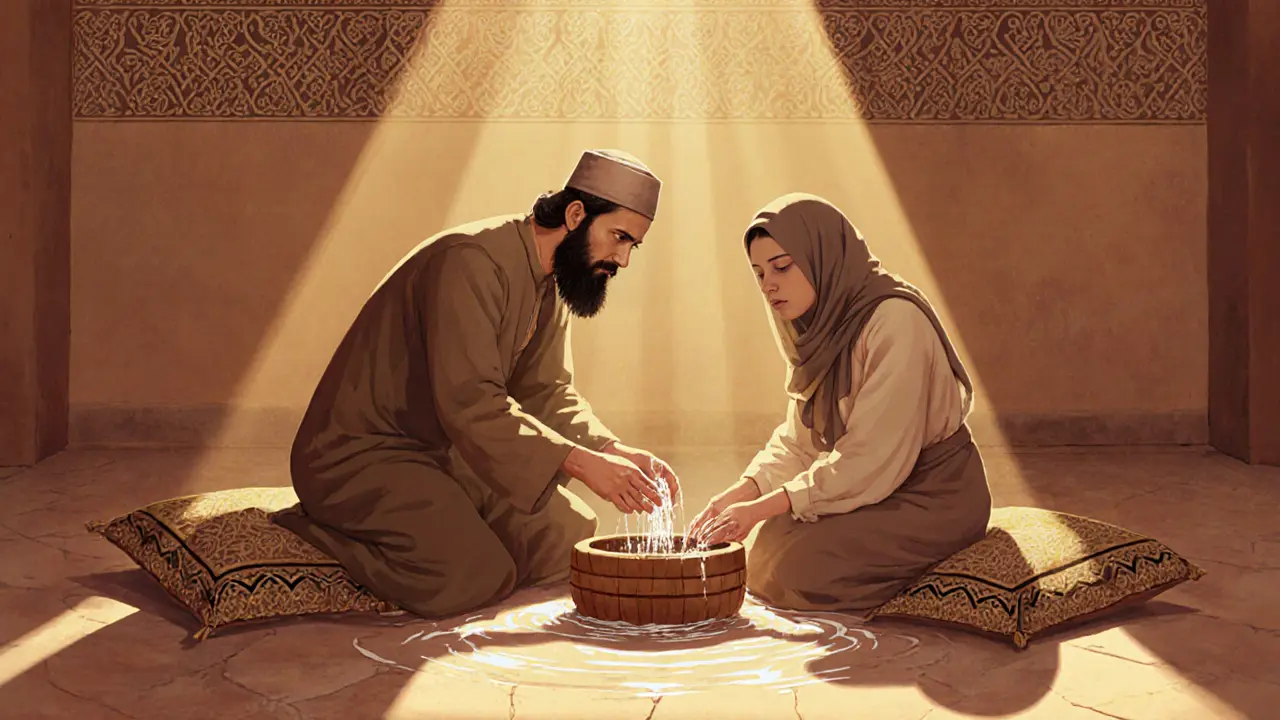
Explore Islamic rulings on a husband washing his wife's body, learn the proper etiquette, benefits, step‑by‑step guidance, and safety tips for Muslim couples.