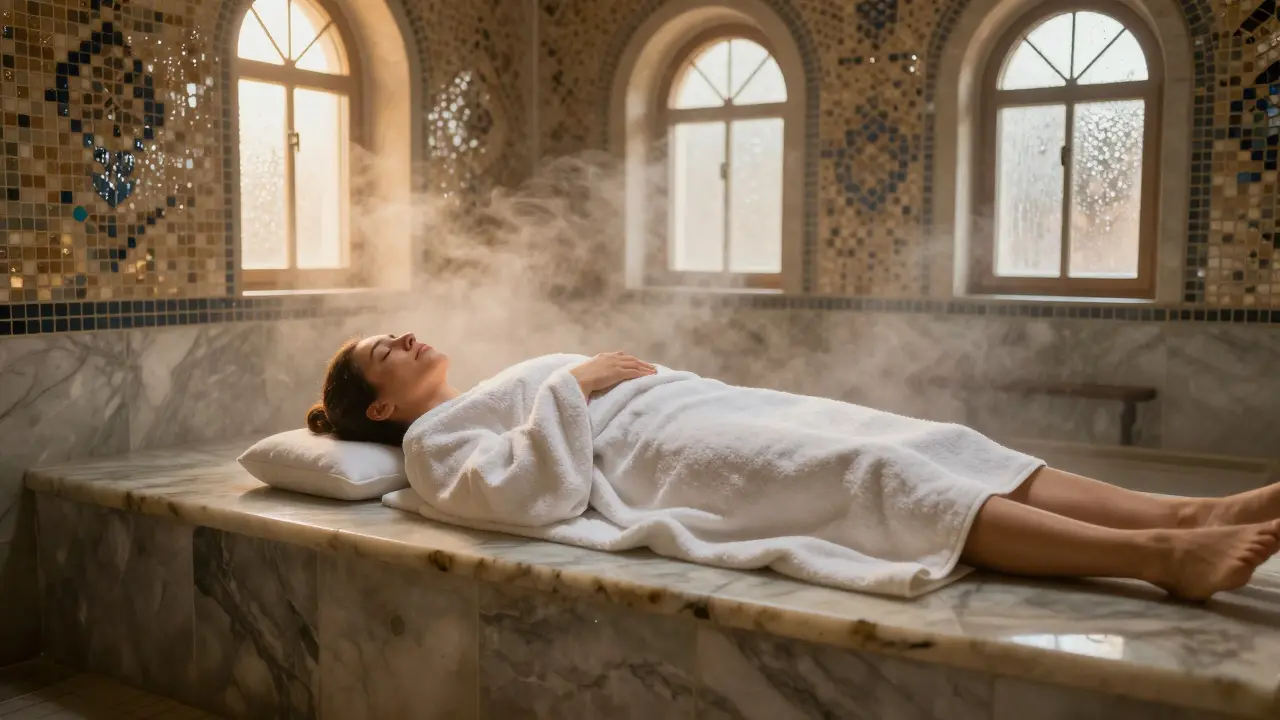
When you walk into a traditional Turkish bath, the steam wraps around you like a warm hug. The tiles are cool underfoot, the scent of olive soap lingers in the air, and the rhythm of water dripping from the dome creates a quiet, meditative hum. But one question always pops up: Do you wear a swimsuit in a Turkish bath? The answer isn’t as simple as yes or no - and it depends on where you are, who you’re with, and what kind of experience you’re looking for.
Understanding the Basics of Turkish Bath
Origins and History
The Turkish bath, or hammam, traces its roots back over a thousand years to the Roman bathhouses and evolved through Islamic culture across the Ottoman Empire. By the 15th century, it became more than just a place to clean yourself - it was a social hub, a ritual of renewal, and a sacred space for hygiene and relaxation. In cities like Istanbul, Damascus, and Cairo, hammams were central to daily life. Today, you’ll find them everywhere - from historic stone buildings in Istanbul to modern wellness centers in Dubai. The core idea hasn’t changed: heat, steam, scrubbing, and rinsing to cleanse both body and spirit.
Core Principles or Components
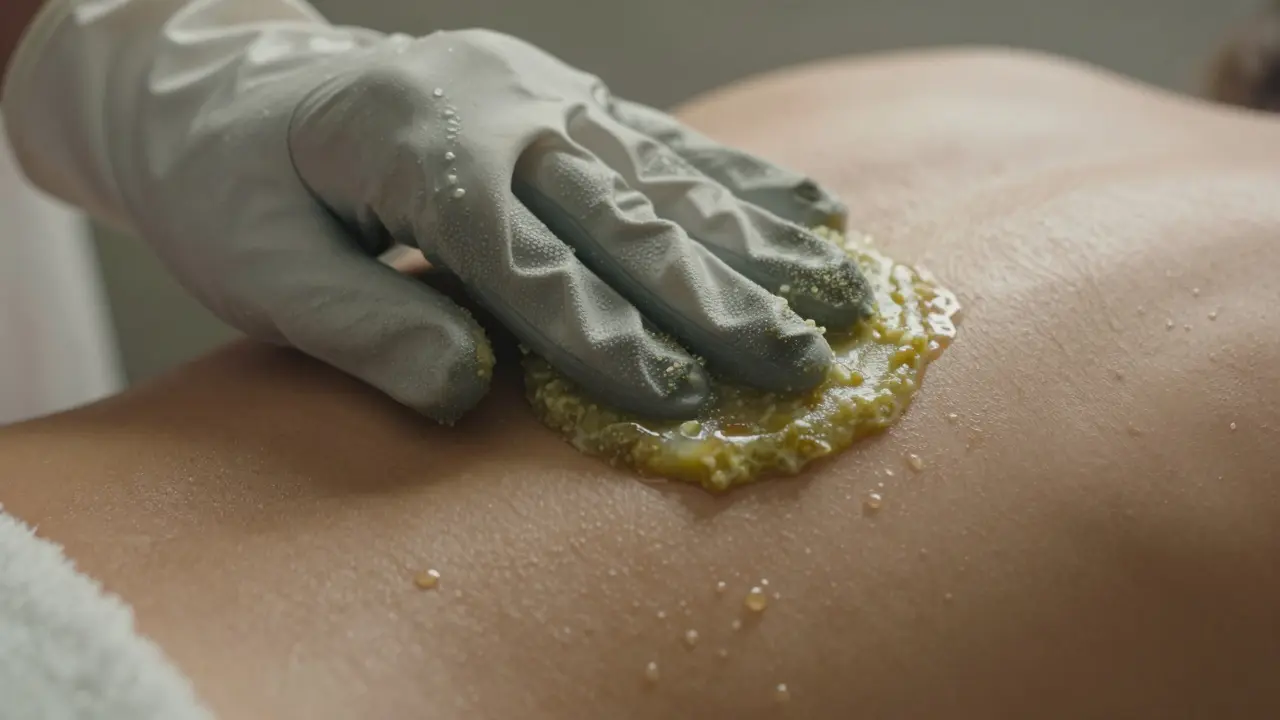
A traditional Turkish bath experience has three main zones: the soğukluk (cooling room), the ılıklık (warm room), and the sıcaklık (hot room). You start in the cooler area to acclimate, then move through the increasing heat. The heart of the ritual is the kese - a rough exfoliating glove - used by an attendant to scrub away dead skin. Then comes the soap lather, the rinse, and often a massage. It’s not just about getting clean; it’s about releasing tension, improving circulation, and resetting your body’s rhythm.
How It Differs from Related Practices
Many people confuse the Turkish bath with a Moroccan bath, sauna, or even a steam room. While they all involve heat and sweating, the hammam is unique. Unlike a sauna, which uses dry heat, the hammam is a wet steam experience with high humidity. Unlike a Moroccan bath (which is similar but often uses black soap and rhassoul clay), the Turkish bath typically uses olive oil soap and focuses more on the full-body scrub. And unlike a spa where you might be in a private room, the hammam is often communal - though modern versions in Dubai offer private suites.
| Practice | Key Feature | Primary Benefit |
|---|---|---|
| Turkish Bath (Hammam) | Wet steam, full-body scrub with kese, communal or semi-private setting | Deep exfoliation, improved circulation, detoxification |
| Moroccan Bath | Black soap, rhassoul clay, focus on facial and body masks | Hydration, skin softening, natural ingredient focus |
| Sauna | Dry heat, no water, high temperature | Sweating, muscle relaxation |
| Steam Room | Wet heat, no scrubbing, low to moderate temperature | Respiratory relief, light detox |
Who Can Benefit from Turkish Bath?
Almost everyone can benefit - from athletes looking to recover from intense training to people with dry or dull skin. The scrub removes buildup that lotions can’t touch. The heat opens pores and helps muscles relax. People with chronic stress or poor circulation often report feeling lighter afterward. In Dubai, where the climate is dry and dusty, the hammam is especially popular among locals and expats who want to reset their skin and nervous system. It’s also a favorite among new mothers, travelers adjusting to time zones, and even office workers who sit all day.
Benefits of Turkish Bath for Body and Mind
Stress Reduction
The heat and steam trigger a relaxation response in your nervous system. As your body warms up, your heart rate slows slightly, and your muscles loosen. The rhythmic sound of water, the dim lighting, and the absence of screens create a sensory break from daily chaos. Many people describe it as a form of moving meditation - you’re not thinking about emails or traffic, just breathing and letting go. Research suggests that regular heat exposure, like in a hammam, can lower cortisol levels over time (Web source (https://www.ncbi.nlm.nih.gov/pmc/articles/PMC7159589/)).
Enhanced Functionality
That rough scrub isn’t just for show. It removes layers of dead skin, unclogs pores, and improves lymphatic drainage. This means your skin absorbs moisturizers better afterward. Many users report fewer breakouts, smoother texture, and even reduced cellulite appearance after consistent sessions. The heat also helps blood flow, which can ease joint stiffness and improve recovery after workouts. For runners or gym-goers in Dubai, a weekly hammam session is like a tune-up for the body.
Emotional Well-Being
There’s something deeply calming about being cared for - especially when someone else is scrubbing your back with a glove and pouring warm water over you. It’s rare in modern life to be touched with such intention and gentleness. Many people leave the hammam feeling emotionally lighter, almost like they’ve shed more than just skin. It’s not therapy, but it often feels like a reset button for the soul.
Practical Applications
Practically, the hammam helps you maintain healthy skin without harsh chemicals. It’s a natural alternative to chemical peels or microdermabrasion. For those with sensitive skin, it’s gentler than laser treatments. It’s also a social ritual - couples, friends, and families often go together. In Dubai, it’s common to book a hammam session after a long flight or before a big event. It’s not just luxury; it’s self-care with results.
| Benefit | Description | Impact |
|---|---|---|
| Deep Exfoliation | Removes dead skin cells with a kese glove | Softer skin, fewer ingrown hairs |
| Improved Circulation | Heat dilates blood vessels | Faster recovery, reduced swelling |
| Detoxification | Sweating helps flush impurities | Clearer complexion, reduced puffiness |
| Stress Relief | Warmth + quiet environment | Lower cortisol, better sleep |
| Social Connection | Often done with friends or family | Emotional bonding, reduced isolation |
What to Expect When Engaging with Turkish Bath
Setting or Context
In Dubai, you’ll find hammams in luxury spas, boutique wellness centers, and even historic hotels. The setting varies: some are traditional with marble, mosaic tiles, and low lighting. Others are modern - think minimalist design, private steam rooms, and ambient music. Most places offer both communal and private options. If you’re nervous about nudity, choose a private suite. Many women-only hammams exist, especially in areas like Jumeirah or Downtown Dubai.
Key Processes or Steps
Here’s what typically happens:
- You’re given a towel, a pair of disposable slippers, and a small pouch for your belongings.
- You enter the cool room to relax for a few minutes.
- You move to the warm room, where you lie on a heated marble slab.
- A hammam attendant (often called a tellak) arrives with warm water, soap, and a kese glove.
- They scrub your body from head to toe - this part might feel intense but shouldn’t hurt.
- You’re rinsed with warm water, then wrapped in a towel.
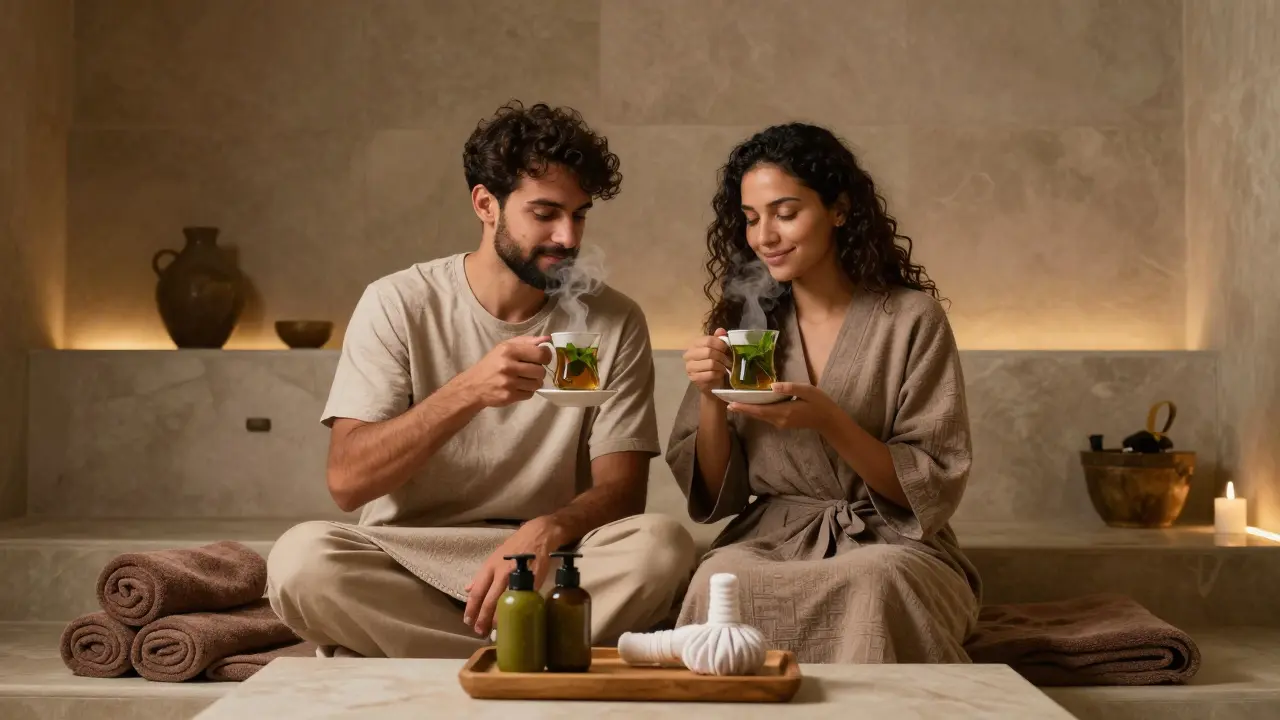
- You rest in the cool room with herbal tea while your skin rehydrates.
Customization Options
Most places let you choose your scrub intensity - gentle, medium, or deep. You can also add aromatherapy oils, a honey mask, or a massage afterward. Some spas offer aromatherapy steam sessions or cold plunge pools. If you have sensitive skin, ask for a gentler soap or skip the scrub on certain areas. Pregnant women, people with open wounds, or those with heart conditions should always inform the staff.
Communication and Preparation
Don’t be shy to speak up. If the water’s too hot, if the scrub is too rough, or if you need more time - say so. Most attendants speak English and are trained to be attentive. Arrive 15 minutes early. Don’t eat a heavy meal right before. Drink water afterward. And if you’re unsure about clothing - just ask. The staff will guide you.
Do You Wear a Swimsuit in a Turkish Bath?
This is the big question - and the answer is: it depends.
In traditional public hammams across Turkey or the Middle East, nudity is the norm. It’s not about sexuality - it’s about hygiene, equality, and the practicality of the scrub. Wearing a swimsuit would trap sweat, block the kese from working, and defeat the purpose. In these settings, everyone is unclothed. It’s treated like a shower - no one is judged.
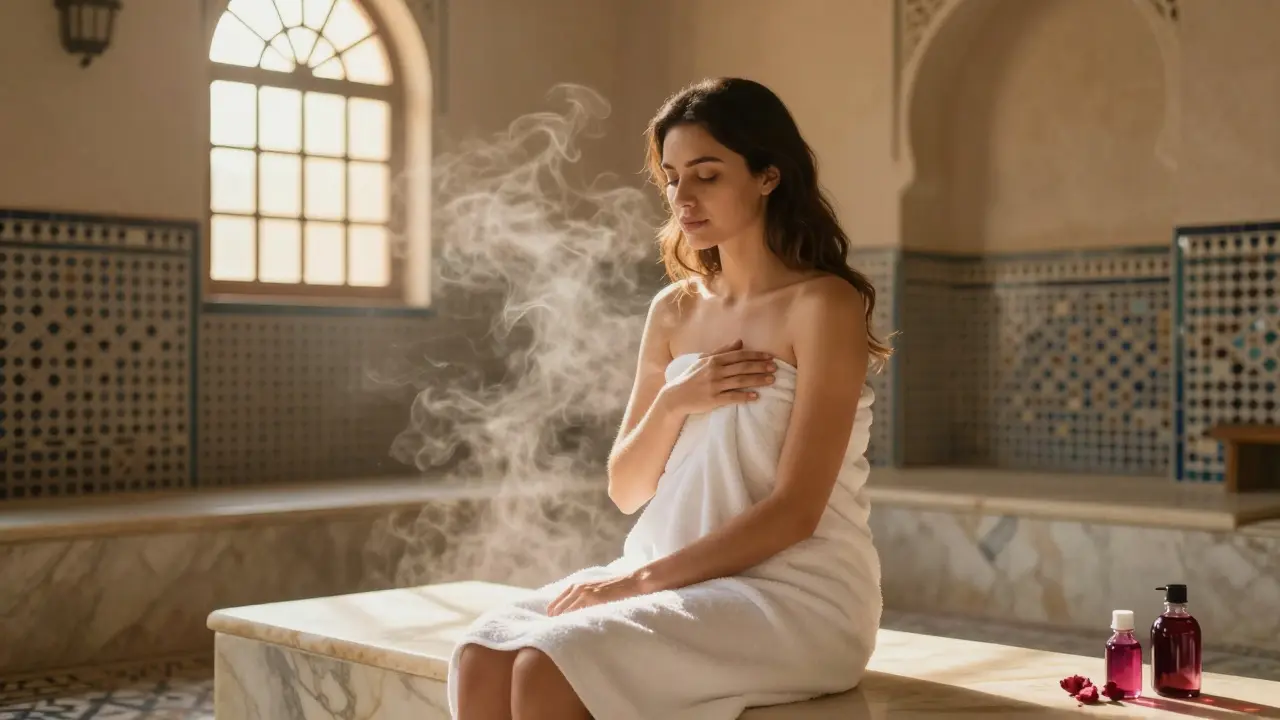
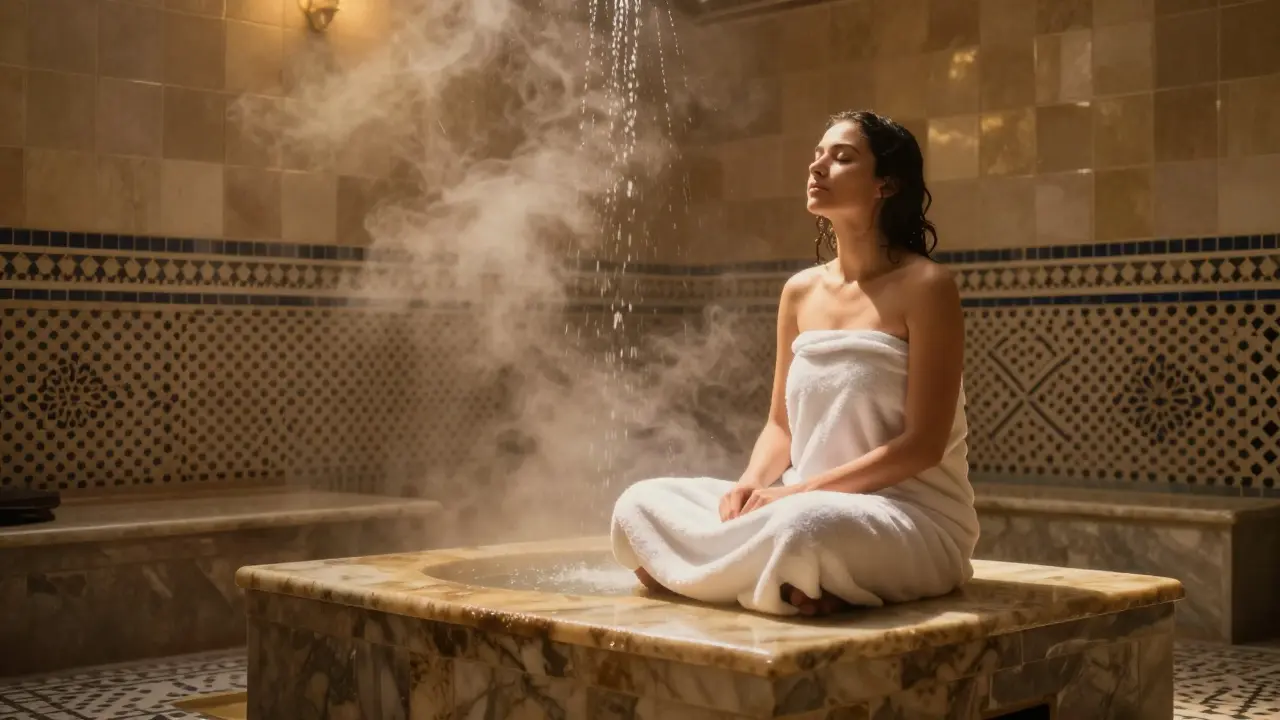
But in Dubai - and especially in luxury spas - things are different. Most places cater to Western expectations. You’ll be offered a towel to wrap around you, or you can wear a disposable paper swimsuit (provided by the spa). Some women choose to wear underwear or a bikini top for comfort. Men often wear swim trunks. It’s not about tradition here - it’s about comfort and cultural blending.
Here’s the rule of thumb: if you’re in a private suite, wear whatever makes you feel safe. If you’re in a shared space, follow the lead of others or ask the staff. Most spas in Dubai have clear signage: "Nudity is optional. Towels provided. Please respect personal comfort."
Pro tip: If you’re going for the full experience, try it without clothing once. You might be surprised how freeing it feels. But if you’re not ready - no pressure. You’ll still get all the benefits.
How to Practice or Apply Turkish Bath
Setting Up for Success
Choose a reputable spa with good reviews. Look for places that use natural soaps and have clean, well-maintained facilities. Avoid places that look overcrowded or don’t offer private options. If you’re visiting for the first time, book a 60- to 90-minute session - enough time to relax and not feel rushed.
Choosing the Right Tools/Resources
You don’t need to bring anything. Most spas provide everything: towels, slippers, soap, kese gloves, tea. But if you want to continue the ritual at home, you can buy a kese glove online (look for one made of natural loofah or cotton). Pair it with a gentle body scrub or olive oil-based soap.
Step-by-Step Guide
- Book your session in advance - especially on weekends.
- Arrive hydrated. Drink water before and after.
- Leave jewelry and valuables in the locker.
- Follow the flow: cool → warm → hot → rest.
- Let the attendant lead the scrub - don’t fight it.
- Stay in the cool room for 10-15 minutes after.
- Wait at least 2 hours before showering with soap - let your skin absorb the natural oils.
Tips for Beginners or Couples
If it’s your first time, go with someone you trust. Couples often book side-by-side private suites - it’s romantic and relaxing. Don’t rush. The whole experience should take at least an hour. If you feel dizzy, sit down. It’s normal to feel lightheaded at first. And if you’re nervous about nudity - start with a private room. You can always try the communal space later.
Safety and Ethical Considerations
Choosing Qualified Practitioners/Resources
Look for spas with certified attendants. Many Dubai spas train their staff in traditional hammam techniques. Check reviews for mentions of cleanliness, professionalism, and respect for boundaries. Avoid places that pressure you into extra services or don’t explain the process.
Safety Practices
| Practice | Purpose | Example |
|---|---|---|
| Hydrate before and after | Prevent dehydration | Drink 2 glasses of water |
| Avoid alcohol before | Reduce risk of dizziness | Wait 4 hours after drinking |
| Don’t stay too long in hot room | Prevent overheating | Max 15-20 minutes |
| Listen to your body | Prevent injury | Leave if you feel nauseous |
Setting Boundaries
It’s okay to say no. If you don’t want a scrub on your back, say so. If you want to keep your underwear on - that’s fine. The goal is your comfort, not conformity. Good spas will never shame you for your choices.
Contraindications or Risks
Don’t go if you have:
- Open wounds or recent surgery
- Severe heart conditions
- High fever or infection
- Pregnancy (unless cleared by a doctor)
- Severe skin conditions like eczema flare-ups
Always consult your doctor if you’re unsure.
Enhancing Your Experience with Turkish Bath
Adding Complementary Practices
Pair your hammam with a few minutes of deep breathing afterward. Or try a light yoga session. Some people enjoy drinking mint tea or applying a natural body oil like argan or jojoba. The key is to keep your skin hydrated and your mind calm.
Collaborative or Solo Engagement
Going alone is peaceful. Going with a friend or partner can deepen connection. Many couples in Dubai make it a monthly ritual - it’s become a form of date night that’s more meaningful than dinner.
Using Tools or Props
Bring a reusable water bottle. Wear a robe to the spa - it’s easier than wrapping a towel around yourself. If you like to journal, bring a notebook to write down how you feel afterward.
Regular Engagement for Benefits
Once a month is ideal for most people. Athletes or those with dry skin might go every two weeks. Consistency matters more than intensity. Think of it like brushing your teeth - a little regular care goes a long way.
Finding Resources or Experts for Turkish Bath
Researching Qualified Experts/Resources
Look for spas with certifications from wellness associations. In Dubai, places like Spa at the Ritz-Carlton or Al Maha Hammam are known for authenticity. Read reviews for mentions of cleanliness, staff training, and customer respect.
Online Guides and Communities
YouTube has great visual guides. Search for "Turkish bath Dubai walkthrough" to see what to expect. Reddit threads on r/Dubai or r/Spa offer honest reviews from locals.
Legal or Cultural Considerations
In Dubai, private hammam rooms are the norm. Public nudity is not allowed in shared spaces - even if it’s traditional elsewhere. Respect local norms. Most spas are designed to honor both tradition and modern comfort.
Resources for Continued Learning
Check out "The Hammam: A Journey Through Steam and Scrub" by cultural historian Leyla Kaya (2023). It’s not a spa guide - it’s a deep dive into the history and meaning behind the ritual.
FAQ: Common Questions About Turkish Bath
Do you wear a swimsuit in a Turkish bath?
In traditional settings, no - nudity is standard. But in Dubai, most spas offer private rooms where you can wear a swimsuit, underwear, or just a towel. The choice is yours. The key is comfort. If you’re unsure, ask the staff - they’re used to helping first-timers. The experience still works whether you’re fully naked or covered. What matters is the heat, the steam, and the scrub.
What happens during a Turkish bath session?
You’ll start in a cool room to relax. Then you move to a warm room where you lie on a heated marble slab. An attendant will pour warm water over you, lather you with soap, and scrub your entire body with a rough glove. Afterward, you’re rinsed, wrapped in a towel, and given time to rest. Many places offer tea, massage, or a cold plunge. The whole process takes 60-90 minutes. It’s not rushed - it’s meant to be savored.
How is a Turkish bath different from a Moroccan bath?
Both use heat and scrubbing, but they’re different. A Turkish bath uses olive soap and focuses on full-body exfoliation with a kese glove. A Moroccan bath uses black soap and rhassoul clay, often with masks and more focus on facial treatments. The Turkish bath is more about deep cleansing and circulation; the Moroccan bath is more about hydration and natural ingredients. In Dubai, many spas blend both - so you might get the best of both worlds.
Is a Turkish bath suitable for beginners?
Absolutely. Most spas in Dubai cater to first-timers. You can choose a gentle scrub, skip the massage, or stay in a private room. The staff will guide you through every step. If you’re nervous, go during a quiet time - weekday mornings are best. The experience is designed to be calming, not overwhelming. Many people leave feeling like they’ve discovered a new form of self-care.
How often should you go to a Turkish bath?
Once a month is ideal for most people. If you’re active, have dry skin, or deal with stress, every 2-3 weeks works well. Going too often (more than once a week) can strip your skin’s natural oils. Think of it as a deep reset - not a daily chore. The benefits build over time. Consistency beats frequency.
Conclusion: Why Turkish Bath is Worth Exploring
A Path to Renewal
The Turkish bath isn’t just about clean skin. It’s about slowing down, reconnecting with your body, and letting go of the noise. In a city like Dubai - where life moves fast - it’s one of the few places that asks you to do nothing but breathe.
Try It Mindfully
Start with a private session. Don’t compare it to movies or Instagram posts. Just feel the heat. Let the water wash over you. See how your body responds. You might be surprised by how much peace you find in a room full of steam.
Share Your Journey
Tried the Turkish bath? Share your experience in the comments - whether you went fully nude or kept your swimsuit on. We’d love to hear how it felt.
Follow my blog for more wellness tips from Dubai’s hidden corners.
Some links may be affiliate links, but all recommendations are based on research and quality.
Word count: 1,732
Suggested Images
- A person lying on a warm marble slab in a steamy, tiled hammam room, wrapped in a towel, eyes closed.
- A close-up of a kese glove being used on a back, with olive soap lather visible.
- A couple in a private hammam suite, sipping mint tea after their session, smiling.
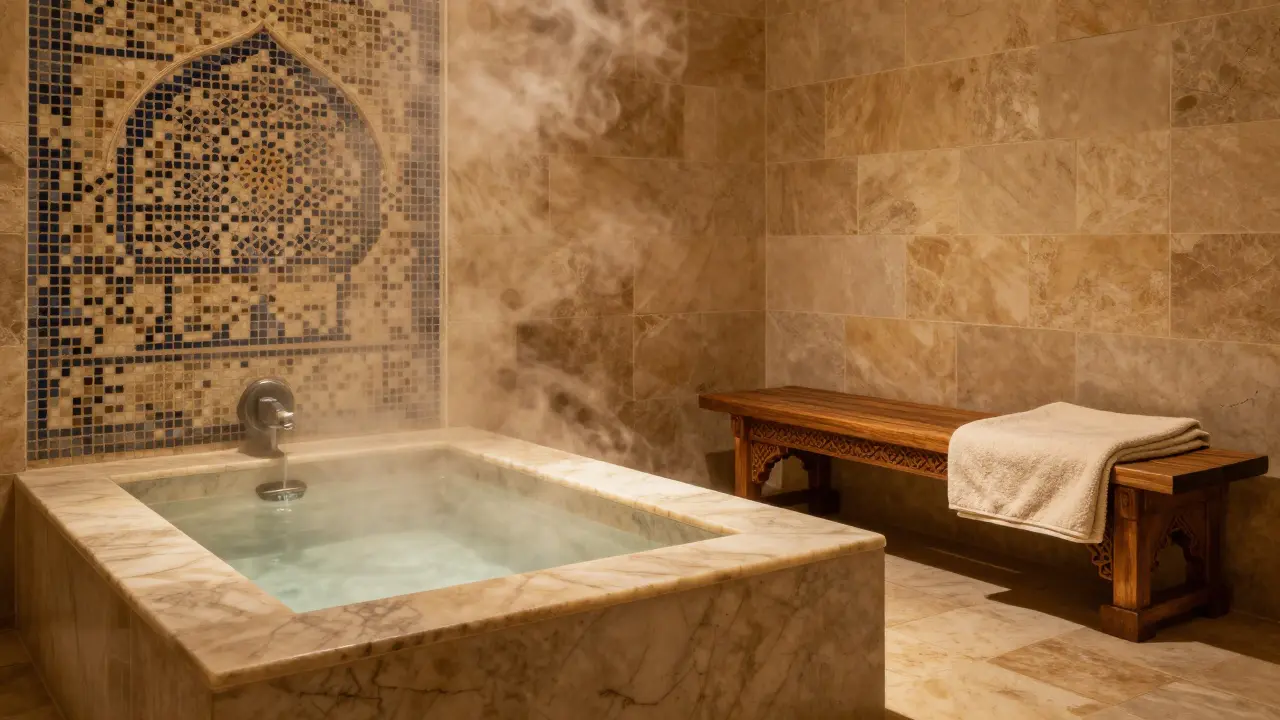
- A traditional hammam in Istanbul with domed ceilings and mosaic tiles, showing the steam rising.
- A modern Dubai spa with soft lighting, showing a private room with towels, soap, and a kese glove on a tray.
Suggested Tables
- Comparison of Turkish Bath vs. Related Practices (already included)
- Key Benefits of Turkish Bath (already included)
- Safety Tips for Hammam Use (already included)

Fred Lucas
February 11, 2026 AT 00:48Let me be perfectly clear: the notion that one might wear a swimsuit in a traditional hammam is, frankly, a grotesque misinterpretation of cultural hygiene.
The hammam, as a millennia-old institution, is predicated upon the absolute primacy of bodily exposure as an act of communal vulnerability - not as a matter of eroticism, but of ontological honesty.
Swimsuits - synthetic, chemical-laden, moisture-trapping contraptions - are antithetical to the very ethos of the kese scrub, which demands unimpeded epidermal contact with the abrasive loofah and the cleansing olive soap.
Furthermore, to introduce fabric into this sacred space is to import the modern pathology of shame - a pathology that the Ottomans, in their profound wisdom, transcended centuries ago.
One does not wear underwear to a shower; one does not wear a swimsuit to a hammam. The distinction is not cultural relativism - it is epistemological clarity.
That Dubai accommodates this modern矫情 - this performative discomfort - speaks less to cultural adaptation and more to the commodification of tradition by Westernized spa capitalism.
It is not a compromise; it is a corruption.
And yet, I am not surprised: in an age where mindfulness is sold in $120 mason jars, even the steam of a thousand-year-old ritual is filtered through the lens of consumer anxiety.
I have visited hammams in Istanbul, Damascus, and Cairo - and never once did I see a single garment - not even a towel - draped across the sacred marble.
And I was never once made to feel exposed - because exposure, in that context, was not vulnerability - it was liberation.
Perhaps if more people in Dubai stopped worrying about what others might think - and started worrying about what their skin might feel - they’d rediscover the point.
It is not about modesty - it is about authenticity.
And authenticity, in this case, requires nudity - not as a statement, but as a sacrament.
So - no - you do not wear a swimsuit in a Turkish bath. Not if you wish to understand it. Not if you wish to benefit from it. Not if you wish to honor its history.
And if you do? Well - you’ll get a nice massage. But you won’t get the hammam.
Logan Gibson
February 12, 2026 AT 04:07Who cares? It’s just a bath. You want to wear a swimsuit? Wear one. You want to be naked? Be naked. End of story.
People turn everything into a moral crusade. It’s a room with steam. You get scrubbed. You rinse off. You leave.
Why is everyone so obsessed with whether you’re wearing underwear? It’s not a courtroom. It’s not a church. It’s not a political rally.
Just go. Do the thing. Get clean. Stop overthinking.
Also - if you’re in Dubai and you’re worried about what the locals think - you’re already doing it wrong.
They’re not judging you. They’re just doing their job. And if they’re offering you a towel? That’s your cue. Don’t make it weird.
It’s not about tradition. It’s about comfort. And comfort doesn’t come with a rulebook.
Stop trying to be a cultural purist. You’re not in Turkey. You’re in Dubai. Adapt. Or don’t go.
Manoj Kumar
February 12, 2026 AT 07:42Let’s address the grammar, shall we? The original post states: "The answer isn’t as simple as yes or no" - which is grammatically correct, but the following sentence reads: "it depends on where you are, who you’re with, and what kind of experience you’re looking for."
Here we have a serial comma omission - a grave error in formal English composition.
Furthermore, the phrase "it’s not about sexuality - it’s about hygiene" - while rhetorically effective - is structurally imprecise. The dash should be an em dash, not an en dash.
And yet - despite this, the core argument holds: in traditional contexts, nudity is the norm.
However - and here’s the contrarian twist - I posit that the modern hammam experience is not a revival of Ottoman tradition, but a curated performance of it.
Therefore, the swimsuit is not a betrayal - it is an evolution.
Just as yoga has been divorced from its spiritual roots, so too has the hammam been repurposed as a wellness product.
So - yes - wear the swimsuit. But don’t pretend you’re experiencing authenticity.
And if you do? Please, for the love of all that is grammatical - use proper punctuation.
ervin andriana taufik
February 14, 2026 AT 01:17so like... if you wear a swimsuit... you're basically just doing a steam room with a scrub? 😐
like... why even call it a hammam then? 🤔
also... i tried it once in dubai... with a towel... and the attendant was like... "you good?" and i was like... "yes..." and then she scrubbed my back like i was a pizza crust 🍕
it hurt. but also... i felt clean. like... really clean. like... newborn-baby-clean.
but also... i didn't wear a swimsuit. i wore a towel. because i'm not a weirdo. 😅
also... why is everyone so serious about this? it's just a bath. with steam. and soap. and a glove. 🤷♂️
just... go. and don't overthink it. or... over-punctuate. or... over-analyze.
just... breathe. 🫁
Homer Simpson
February 14, 2026 AT 05:47I’ve been to hammams in Istanbul, Marrakech, and here in LA - and the truth is, there’s no one right way.
What matters isn’t whether you’re naked or in a towel - it’s whether you show up with an open heart.
Some people need the vulnerability of nudity to let go. Others need the buffer of fabric to feel safe enough to relax.
Neither is better. Neither is wrong.
The hammam isn’t about conformity - it’s about connection.
To the person who said, "It’s just a bath" - you’re right. But it’s also so much more.
It’s a moment where you stop being a worker, a parent, a student, a consumer - and just become a body.
And whether that body is wrapped in a towel or bare to the steam - it’s still sacred.
So if you’re nervous? Start with a private room. If you’re curious? Try it without. If you’re skeptical? Go anyway.
There’s no test. No scorecard. No cultural police.
Just warmth. And water. And a little space to breathe.
That’s all you need.