Does Cupping Actually Work? The Science, Myths, and Real Results
When you see someone with dark circular marks on their back, it’s easy to assume it’s a tattoo gone wrong-or a cult ritual. But if you’ve ever walked into a spa in Dubai and seen cupping offered alongside massage and aromatherapy, you might wonder: does cupping actually work? The answer isn’t simple. It’s not magic, and it’s not a scam. It’s a 3,000-year-old practice with modern science slowly catching up. People swear by it for pain relief, recovery, and relaxation. Others call it placebo. So who’s right? Let’s break it down-no hype, no fluff-just what you can realistically expect.
Understanding the Basics of Cupping
Origins and History
Cupping has roots in ancient Chinese, Egyptian, and Middle Eastern medicine. The earliest records come from the Ebers Papyrus in Egypt, dated to 1550 BCE, where it was used to draw out "bad humors." In traditional Chinese medicine, it’s tied to Qi-the body’s energy flow. The idea? Blockages cause pain or illness, and suction helps move things along. Fast-forward to today, and you’ll find cupping in Olympic athlete recovery rooms, luxury spas in Dubai, and even physiotherapy clinics. It’s not new. But its modern use? That’s where things get interesting.
Core Principles or Components
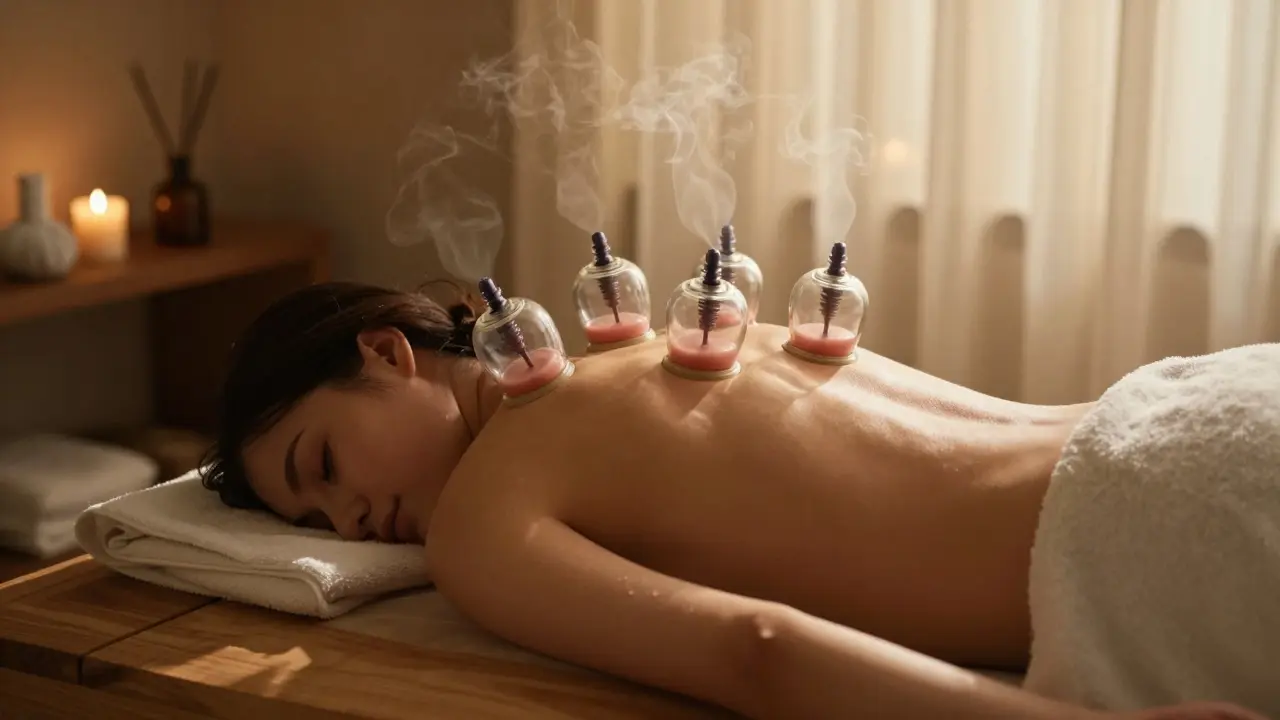
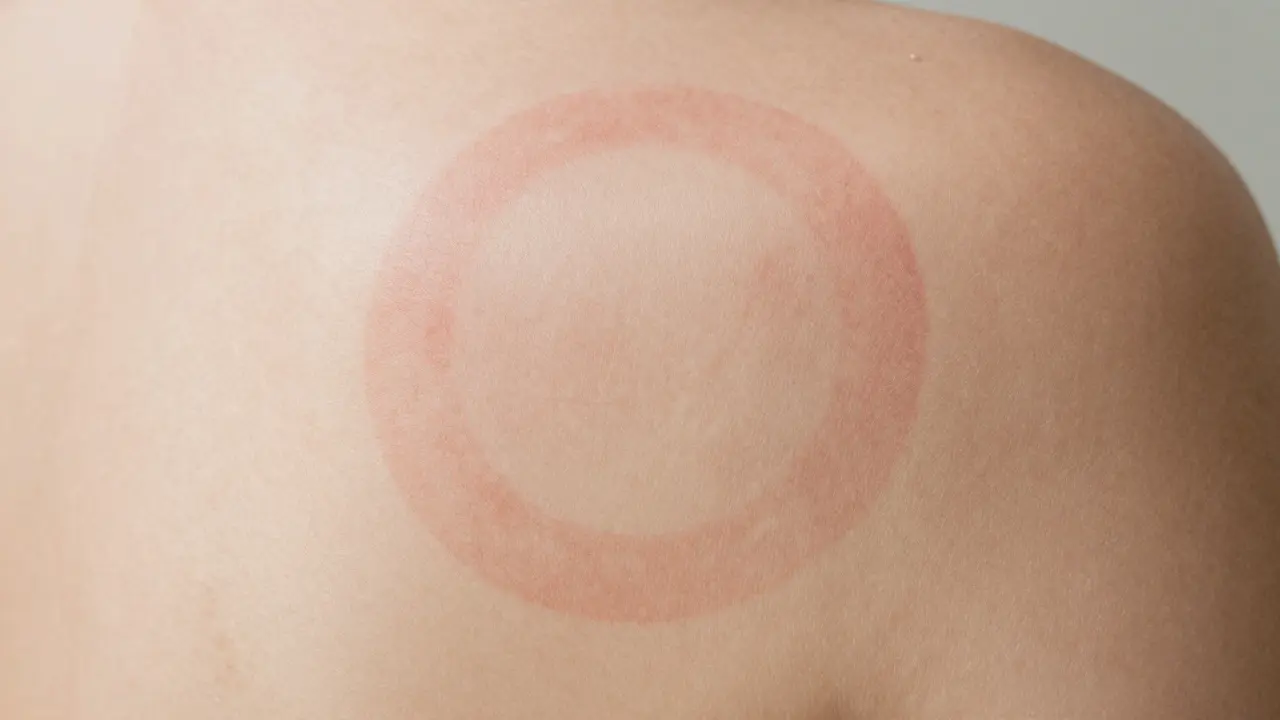
Cupping uses glass, silicone, or plastic cups placed on the skin. A vacuum is created either by heat (traditional) or a manual pump (modern). This pulls the skin and underlying tissue upward. The result? Increased blood flow to the area. That’s it. No needles. No herbs. No mystical energy transfer. The suction creates mild trauma to the tissue, which triggers the body’s natural healing response-similar to how a bruise heals. The circular marks you see? They’re not bruises from damage. They’re capillary rupture from pressure, fading in 3-10 days. Think of it like a deep-tissue massage with a vacuum seal.
How It Differs from Related Practices
People often confuse cupping with acupuncture, massage, or Gua Sha. Here’s how it stacks up:
| Practice | Key Feature | Primary Benefit |
|---|---|---|
| Cupping | Creates suction on skin | Increases local circulation, reduces muscle tension |
| Acupuncture | Inserts fine needles into meridians | Modulates nervous system, targets specific points |
| Massage | Manual pressure and kneading | Relaxes muscles, improves flexibility |
Unlike acupuncture, cupping doesn’t target energy lines. Unlike massage, it doesn’t rely on pressure from hands. It’s a passive technique-your body responds to the pull, not the push.
Who Can Benefit from Cupping?
Cupping isn’t for everyone, but it’s helpful for specific groups. Athletes use it to recover from intense training. Office workers with chronic neck and shoulder stiffness find relief. People with fibromyalgia or lower back pain often report reduced discomfort. It’s also popular among those seeking natural alternatives to painkillers. But if you’re looking for a cure for diabetes, cancer, or autoimmune disease-skip it. Cupping doesn’t treat systemic illness. It’s a tool for localized relief and relaxation.
Benefits of Cupping for the Body
Stress Reduction
When the cups are applied, the body responds with a parasympathetic shift-your nervous system switches from "fight or flight" to "rest and digest." That’s why many people feel deeply relaxed during and after a session. It’s not just psychological. The gentle pulling stimulates sensory nerves, which send calming signals to the brain. One 2021 review in the Journal of Traditional and Complementary Medicine noted that cupping consistently lowered cortisol levels in participants. Think of it as a deep breath for your muscles.
Enhanced Functionality
Cupping increases blood flow to the treated area. More blood means more oxygen, more nutrients, and faster removal of metabolic waste like lactic acid. That’s why athletes use it after workouts. For someone with stiff shoulders from typing all day, cupping can loosen tight fascia-the connective tissue wrapping muscles. It doesn’t "fix" posture, but it gives your body a better chance to recover from poor posture. Many users report improved range of motion after just one session.
Emotional Well-Being
There’s a quiet, almost meditative quality to cupping. You lie still. The cups create a gentle suction, and the room fills with quiet. For people dealing with anxiety or burnout, this stillness matters. It’s not therapy, but it creates space. One Dubai-based physiotherapist told me her clients often say, "I didn’t realize how tense I was until the cups came off." That moment of release isn’t just physical-it’s emotional.
Practical Applications
Here’s what cupping can realistically do for daily life:
| Benefit | Description | Impact |
|---|---|---|
| Pain Relief | Reduces localized muscle and joint discomfort | May reduce need for NSAIDs |
| Recovery Aid | Speeds up muscle recovery after exercise | Shorter downtime for athletes |
| Relaxation | Calms nervous system, lowers stress hormones | Better sleep, reduced anxiety |
| Improved Mobility | Loosens tight fascia and connective tissue | Easier movement, less stiffness |
What to Expect When Engaging with Cupping
Setting or Context
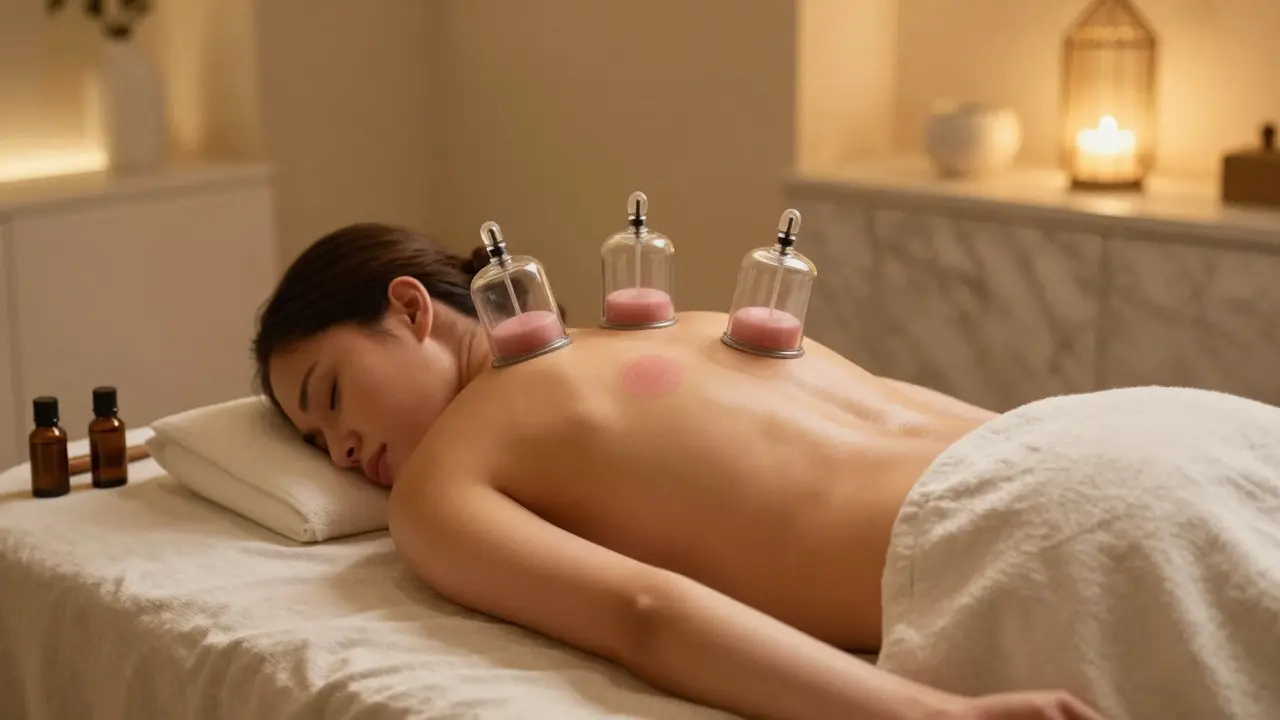
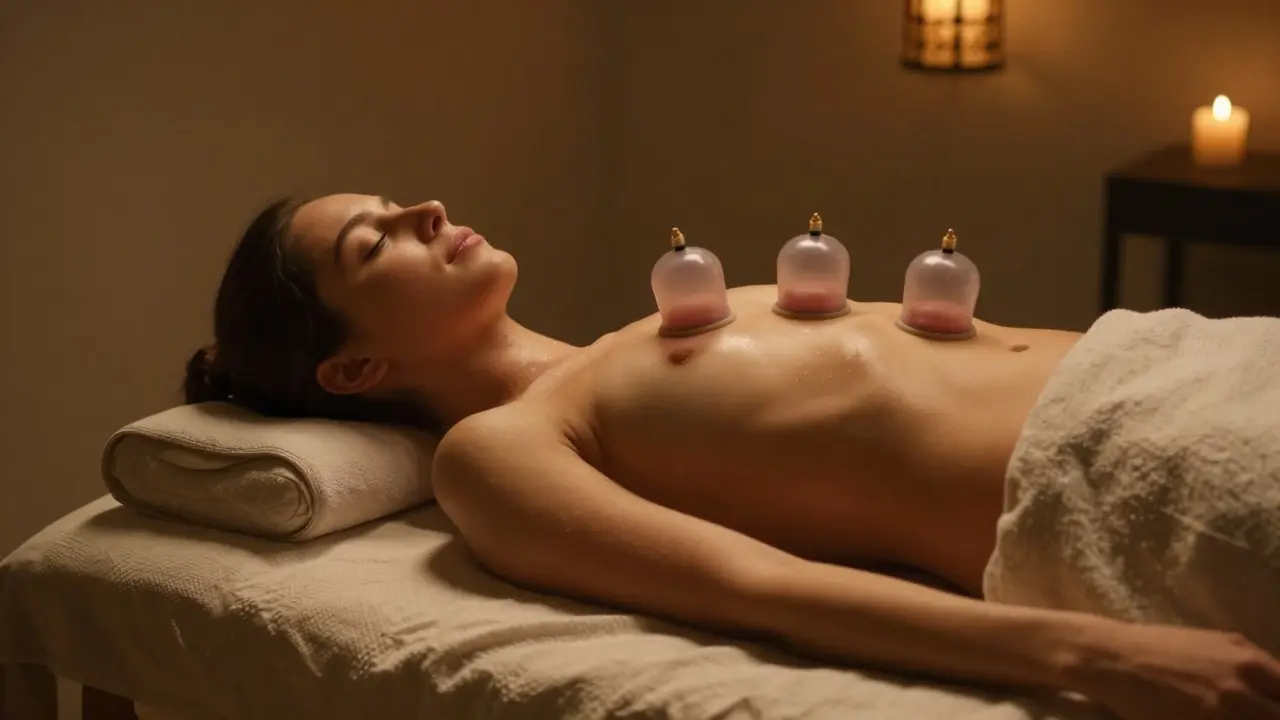
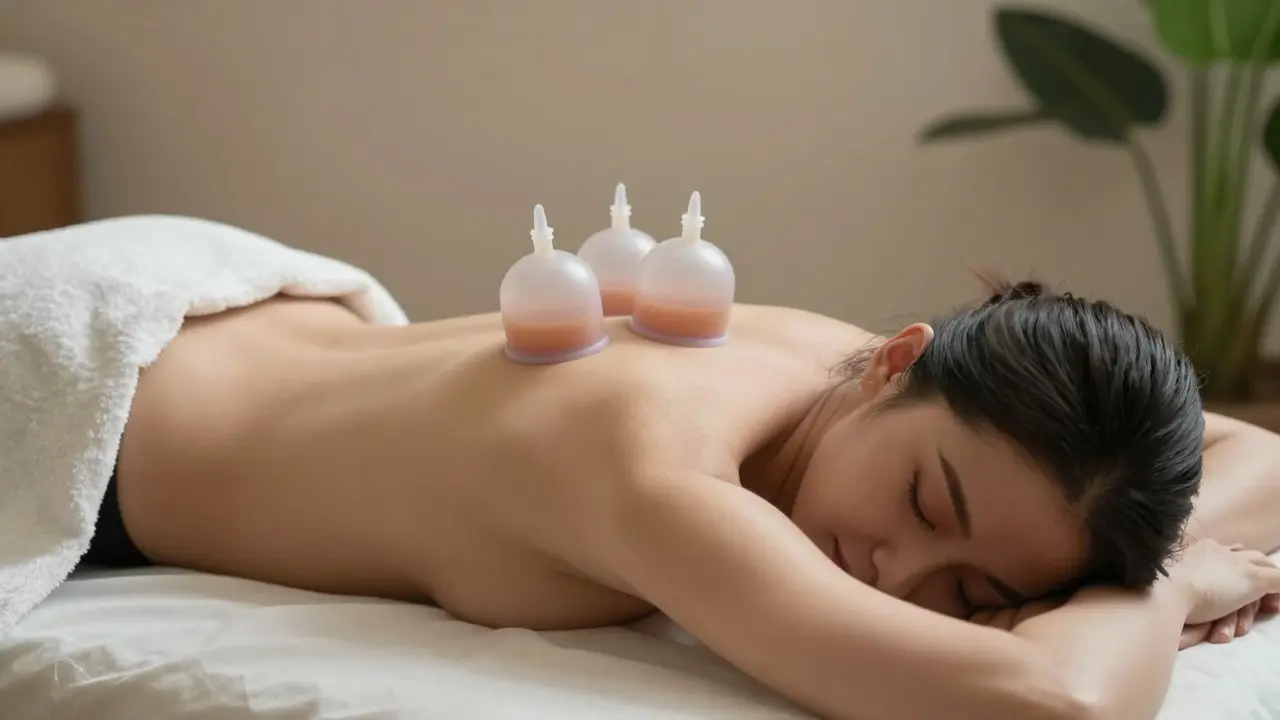
Most cupping happens in quiet, dimly lit rooms-think spa vibes with soft music and warm towels. In Dubai, many clinics use heated tables and essential oils to enhance the experience. The environment is designed to make you feel safe and calm. You’ll lie face down or on your back, fully draped. The practitioner will apply oil to help the cups glide. It’s not a medical procedure-it’s a wellness experience.
Key Processes or Steps
A typical session lasts 15-30 minutes. First, the practitioner assesses your tension points-often the back, shoulders, or legs. Then, they place the cups. In dry cupping (the most common type), the cups stay still for 5-15 minutes. In moving cupping, they’re glided over oiled skin. You’ll feel a gentle pulling sensation-not pain. Some describe it as a deep hug. After removal, you might see circular marks. They’re harmless and fade quickly.
Customization Options
Cupping isn’t one-size-fits-all. Pressure can be adjusted-light for relaxation, deeper for athletes. Silicone cups are gentler than glass. Some practitioners combine cupping with heat, infrared lamps, or acupuncture. You can choose to target specific areas or do a full back session. If you’re sensitive to marks, ask for light suction or shorter sessions.
Communication and Preparation
Before your session, tell your practitioner if you’re on blood thinners, pregnant, have skin conditions, or are feeling unwell. Don’t show up with sunburned skin or after a heavy meal. Hydrate well. And if something feels wrong during the session-speak up. Cupping should never hurt.
How to Practice or Apply Cupping
Setting Up for Success
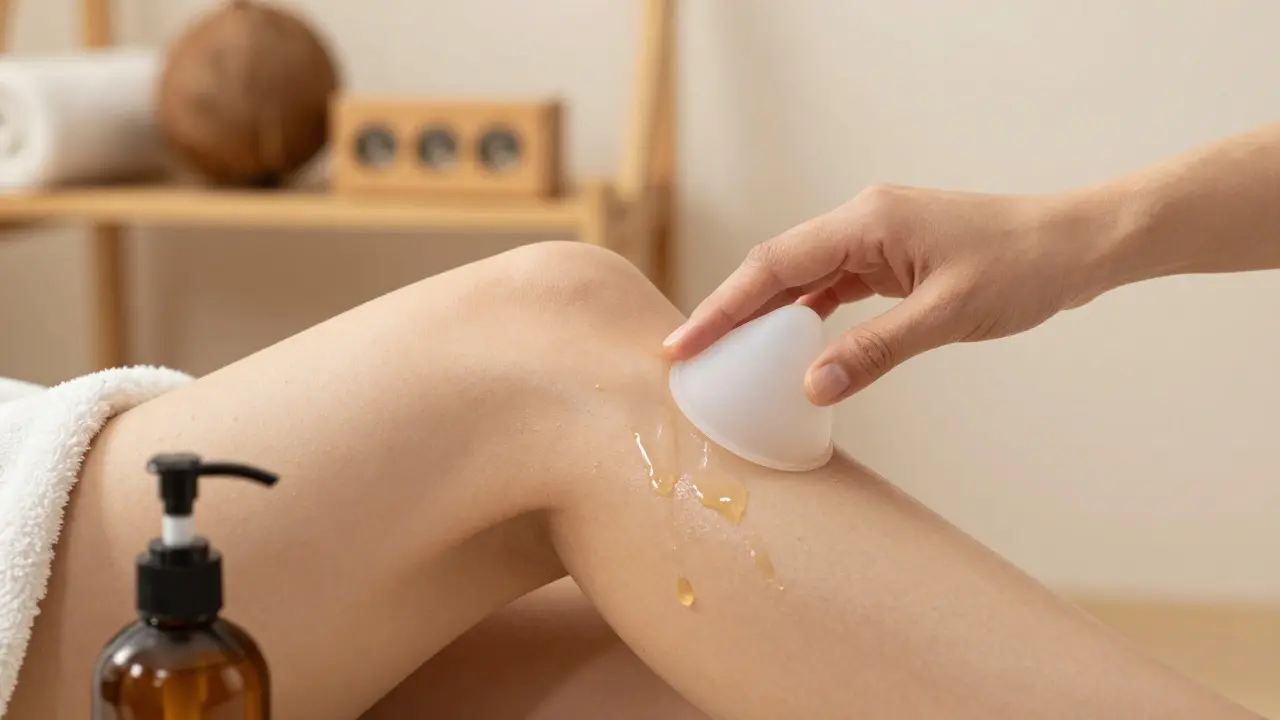
If you’re trying cupping at home, start with silicone cups-they’re safe, easy to use, and don’t require fire. Buy them from reputable wellness brands. Use them on large muscle groups like the back or thighs. Never use them on bony areas, open wounds, or near the spine. Keep your skin clean and apply a light oil. Do it after a warm shower-your muscles will be looser.
Choosing the Right Tools/Resources
For beginners, stick to silicone or plastic cups with manual pumps. Avoid glass cups unless you’ve been trained-heat can cause burns. Look for products labeled "medical-grade" or "FDA-cleared." In Dubai, clinics like Al Noor Wellness or The Spa at Jumeirah use professional-grade equipment. If you’re unsure, go to a licensed therapist.
Step-by-Step Guide
- Wash and dry the skin area.
- Apply a light oil (coconut or jojoba).
- Place the cup on the skin and squeeze the pump to create suction.
- Leave it for 5-10 minutes.
- Release the suction slowly by pressing the release valve.
- Repeat on other areas, but don’t do more than 3-4 spots per session.
Tips for Beginners or Couples
First-timers should start with 5-minute sessions. Don’t expect miracles. The first time might feel strange. If you’re doing it with a partner, take turns applying the cups-it’s a great way to bond. Always check in: "Does this feel okay?" Cupping isn’t about endurance. It’s about comfort.
Safety and Ethical Considerations
Choosing Qualified Practitioners/Resources
In Dubai, look for therapists certified in traditional Chinese medicine, physiotherapy, or licensed massage therapy. Ask about their training. Reputable clinics display credentials. Avoid places that promise "cures" for serious diseases. Cupping is supportive care-not a replacement for medical treatment.
Safety Practices
Here’s how to stay safe:
| Practice | Purpose | Example |
|---|---|---|
| Sanitize cups | Prevent infection | Use alcohol wipes between clients |
| Don’t use on broken skin | Avoid irritation | Wait until rash or sunburn heals |
| Limit session time | Prevent bruising | Max 15 minutes per area |
Setting Boundaries
Always give consent. If you’re uncomfortable with the pressure, say so. You can ask for the cups to be removed at any time. No practitioner should pressure you into longer sessions or additional treatments.
Contraindications or Risks
Avoid cupping if you have:
- Bleeding disorders or are on blood thinners
- Pregnancy (especially on the abdomen or lower back)
- Severe skin conditions like eczema or psoriasis
- Recent surgery or open wounds
- Fevers or acute infections
If you’re unsure, consult your doctor first.
Enhancing Your Experience with Cupping
Adding Complementary Practices
Cupping works better with other wellness habits. Pair it with hydration, gentle stretching, or a warm bath. Many people combine it with mindfulness breathing during the session. Some add aromatherapy-lavender or eucalyptus oils enhance relaxation. Don’t overdo it. One cupping session per week is enough for most people.
Collaborative or Solo Engagement
Cupping is often done alone, but it can be a shared experience. Partners can apply cups to each other’s backs. It’s not about skill-it’s about care. The act of touching gently, listening, and checking in builds connection. Solo? Perfect. Use it as a ritual. Light a candle. Play calming music. Make it your quiet time.
Using Tools or Props
Essential tools: silicone cups, massage oil, a timer, and a towel. Optional: a heating pad to warm the skin first, or a foam roller to loosen muscles after. Avoid fancy gadgets. You don’t need a $300 cupping machine. Simple works best.
Regular Engagement for Benefits
One session won’t change your life. But if you do it once a week for a month, you might notice less stiffness, better sleep, or reduced tension headaches. Consistency matters more than intensity. Think of it like brushing your teeth-not a one-time fix, but a daily habit that adds up.
Finding Resources or Experts for Cupping
Researching Qualified Practitioners/Resources
In Dubai, check reviews on Google or Tripadvisor. Look for practitioners with certifications from recognized bodies like the International Association of Cupping Therapy or the National Certification Commission for Acupuncture and Oriental Medicine (NCCAOM). Ask: "What’s your training? How many sessions have you done?" Trust your gut-if they sound pushy or vague, walk away.
Online Guides and Communities
Reputable sites like the Journal of Traditional and Complementary Medicine and the American Association of Acupuncture and Oriental Medicine offer science-backed overviews. Avoid TikTok influencers selling "miracle cures." Stick to clinics, universities, and medical journals.
Legal or Cultural Considerations
In the UAE, cupping is legal and widely accepted. Many Emirati families have used it for generations. But always ensure your practitioner follows hygiene standards. The Dubai Health Authority regulates wellness services-licensed clinics must meet clear safety rules.
Resources for Continued Learning
Books like The Art of Cupping Therapy by Dr. Chen or the Textbook of Traditional Chinese Medicine offer solid foundations. YouTube channels from licensed physiotherapists (not influencers) can show proper technique. Start with short videos-10 minutes max.
FAQ: Common Questions About Cupping
What to expect from cupping?
You’ll lie down while cups are placed on your skin, creating a gentle pulling sensation. Most people feel relaxed, sometimes even sleepy. Afterward, you’ll notice circular marks-these are normal and fade within days. You might feel slightly sore, like after a deep massage, but not in pain. No downtime. You can return to work or daily activities immediately. The real benefit? A sense of release-not just in your muscles, but in your mind.
What happens during cupping?
The practitioner applies cups to areas of tension-usually the back, shoulders, or legs. Suction is created using a pump or heat. The skin lifts slightly into the cup, increasing blood flow. In dry cupping, the cups stay still. In moving cupping, they’re glided over oiled skin. The session lasts 15-30 minutes. No needles, no burning. You might hear a soft "pop" as the cup seals. The whole process is quiet and calming.
How does cupping differ from acupuncture?
Acupuncture uses thin needles to stimulate specific points along energy channels. Cupping uses suction to pull tissue upward, improving circulation. Acupuncture targets internal systems-nerves, organs. Cupping works on muscles and fascia. One is internal, the other external. Many clinics combine both, but they’re different tools. Think of acupuncture as tuning a radio and cupping as massaging the antenna.
What is the method of cupping?
The method is simple: create negative pressure on the skin. In traditional Chinese cupping, a flame briefly heats the inside of a glass cup, then it’s placed on the skin-the cooling air creates suction. Modern cupping uses a hand pump to remove air. Silicone cups are squeezed to create vacuum. The cups stay on for 5-15 minutes. No chemicals, no electricity. It’s mechanical. The body responds to the stretch and increased blood flow. That’s the whole method.
Is cupping suitable for beginners?
Yes, absolutely. Start with a professional session to learn what pressure feels right. Then try at-home silicone cups for maintenance. Don’t expect instant results. The first session might feel odd, but most people find it soothing. Beginners should avoid strong suction and long sessions. Stick to 5-10 minutes per area. Listen to your body. If it feels good, keep going. If it hurts, stop. Cupping is about comfort, not endurance.
Conclusion: Why Cupping is Worth Exploring
A Path to Natural Relief
Cupping isn’t a miracle cure. But for chronic tension, post-workout soreness, or just needing to unwind, it’s one of the most effective tools we have that’s gentle, non-invasive, and drug-free. It doesn’t promise to fix everything-but it can help your body reset.
Try It Mindfully
If you’re curious, try one session. Go to a reputable clinic. Don’t go in expecting miracles. Go in to feel what it’s like. Notice how your body responds. That’s the real value-not the marks on your skin, but the quiet relief afterward.
Share Your Journey
Tried cupping? Share your experience in the comments-what did you feel? Did the marks fade quickly? Did it help your pain? Follow this blog for more honest, no-fluff guides to wellness practices you can actually trust.
Some links may be affiliate links, but all recommendations are based on research and quality.
Word count: 1,687
Suggested Images
- A person lying face down with glass cups on their back, soft lighting, serene spa setting
- Close-up of circular cupping marks on skin, showing natural fading color
- Hand holding silicone cup with oil on skin, demonstrating home use
- Two people smiling after a cupping session, one with towel draped, relaxed posture
- Spa room in Dubai with wooden decor, candles, and cupping supplies on a tray
Suggested Tables
- Comparison of Cupping, Acupuncture, and Massage
- Key Benefits of Cupping
- Cupping Safety Tips

antonio montana
January 13, 2026 AT 05:38Okay, I’ve tried cupping twice-once after a marathon, once after a week of hunching over my laptop. The marks? Yeah, they looked like someone hugged me with a vacuum cleaner. But honestly? I felt lighter. Like my shoulders finally remembered how to relax. Not magic, but not placebo either. I’ll keep doing it. Just… maybe skip the deep suction next time. 😅
Parul Singh
January 13, 2026 AT 10:32THIS is why the West is falling apart. 3,000-year-old Chinese superstition? And you call it ‘science’? 😒 Cupping is just glorified bruising. We have MRI machines and NSAIDs, but no-let’s slap glass cups on people like they’re in a medieval monastery. And don’t get me started on ‘Qi’-it’s not a real thing. Stop romanticizing pseudoscience. 🇮🇳
jeremy noble
January 14, 2026 AT 08:07Parul, I hear you-but let’s not throw the baby out with the bathwater. Cupping’s mechanism isn’t mystical-it’s biomechanical. Negative pressure → capillary microtrauma → localized inflammation response → increased perfusion → faster clearance of metabolites. That’s physiology, not mysticism. And yeah, it’s ancient, but so is acupuncture-and we now have RCTs backing *some* of it. The key is context: it’s a tool, not a cure. Used appropriately? It’s a legit adjunct. Used as a replacement for real care? Yeah, that’s dangerous. But that’s true of *everything*.
Also-props to the author for not overselling it. Rare these days.
Deborah Billingsley
January 16, 2026 AT 00:59Jeremy, you just nailed it. 🙌 I’m a physical therapist and I’ve seen clients go from ‘I can’t lift my arm’ to ‘I can reach the top shelf’ after 3 sessions. It’s not a cure-all, but it’s a gentle nudge the body loves. And honestly? The emotional release? Real. People cry after sessions. Not because of the cups-but because they finally let go. That’s worth something. 🫂
Also-Parul, I get your frustration. But not every non-Western practice is ‘superstition.’ Some are just *different*. Let’s not erase centuries of lived experience because it doesn’t fit our lab tests. 🤷♀️
mary glynn
January 17, 2026 AT 02:02Ugh. So we’re doing the ‘ancient wisdom is valid’ thing again? 🙄 I mean, sure, cupping’s been around forever. So has bloodletting. And witchcraft. Does that make it good? No. It just makes it old. And those marks? They’re literally bruises. Why are we pretending this is a wellness trend and not just ‘I got hugged by a bell jar’?
Also, ‘Qi’? Come on. We’re not in 1200 BCE. 😴
Kirsten Miller
January 17, 2026 AT 22:31There’s something quietly profound about the silence during cupping-no talking, no screens, just the slow pull of air on skin. It’s not about the cups, I think. It’s about the pause. The body doesn’t need more stimulation-it needs stillness. And maybe that’s what’s being healed, not the fascia. Maybe it’s the mind’s constant screaming that finally gets muted. The marks? Just a side effect of the quiet.
Also-why do we always assume ancient = inferior? What if we’re the ones who lost something by over-intellectualizing pain? Just… wondering.
Liana Lorenzato
January 18, 2026 AT 02:35How quaint. A 3,000-year-old practice, now commodified in Dubai spas for $120 an hour, marketed to overworked Silicon Valley types who think ‘wellness’ is a lifestyle brand. The irony is exquisite. They’ll pay for suctioned skin while ignoring sleep hygiene, cortisol management, and actual mobility work. It’s performative healing. The real issue? Capitalism has turned ancient rituals into Instagram aesthetics.
And those ‘circular marks’? They’re not ‘fading’-they’re a status symbol. Look, I did the thing. 🥱
Peter Hall
January 19, 2026 AT 16:07Did it help? Yes. Marks faded in 5 days. No side effects. Would do again. That’s it.
Jane Shropshire
January 20, 2026 AT 13:20I think cupping is like when you crack your back. You don’t know why it feels good, but it does. Maybe it’s just your body saying ‘thank you’ for paying attention. I don’t need science to tell me that. I just need to feel it.
lucy hinde
January 22, 2026 AT 06:54There’s a difference between ‘it works because of energy’ and ‘it works because of pressure-induced physiological response.’ The former is myth. The latter is biology. And the fact that we’re still debating this-after decades of research-says more about our cultural discomfort with non-pharmaceutical relief than it does about cupping’s efficacy. The body doesn’t care about your skepticism. It responds to stimuli. And sometimes, that stimulus is a vacuum.
Also-why is it always the loudest voices that assume ‘ancient’ = ‘false’? Maybe we’re just too impatient to let things unfold slowly. 🤔