Who Should Avoid Cupping? Risks and Who Needs to Be Careful
When you hear about cupping, a traditional therapy that uses suction cups on the skin to improve circulation and relieve muscle tension. Also known as vacuum therapy, it’s become popular in Dubai spas for its instant relief and soothing feel. But cupping isn’t safe for everyone—even if it looks simple or natural.
People with bleeding disorders, conditions like hemophilia or thrombocytopenia that affect how blood clots should never try cupping. The suction can cause bruising that won’t heal properly, and in rare cases, lead to serious internal bleeding. Same goes for those taking blood thinners, medications like warfarin or aspirin that reduce clotting. Even a mild cupping session can turn into a bruise that lasts weeks. Pregnant women, especially in the first trimester, are also advised to avoid it—suction on the lower back or abdomen could trigger contractions or stress the body when it’s already adjusting to big changes.
Other red flags include open wounds, skin infections, or recent surgery sites. Cupping pulls blood to the surface, which sounds good until it means reopening a healing cut or spreading bacteria. People with severe heart conditions or low blood pressure should also be cautious. The sudden shift in circulation can cause dizziness or fainting, especially in Dubai’s hot climate where dehydration is already a risk. Even if your spa offers cupping as a standard add-on, it’s not a one-size-fits-all treatment.
If you’re unsure, ask your doctor before booking. Many Dubai spas now screen clients for these conditions, but not all do. The best ones will ask about your health history before starting. Cupping can feel amazing when it’s right for you—but it’s not worth the risk if your body isn’t ready. Below, you’ll find real questions and answers from people who’ve been there: who skipped it, why they regretted trying it, and how to spot a safe, responsible spa that puts your health first.
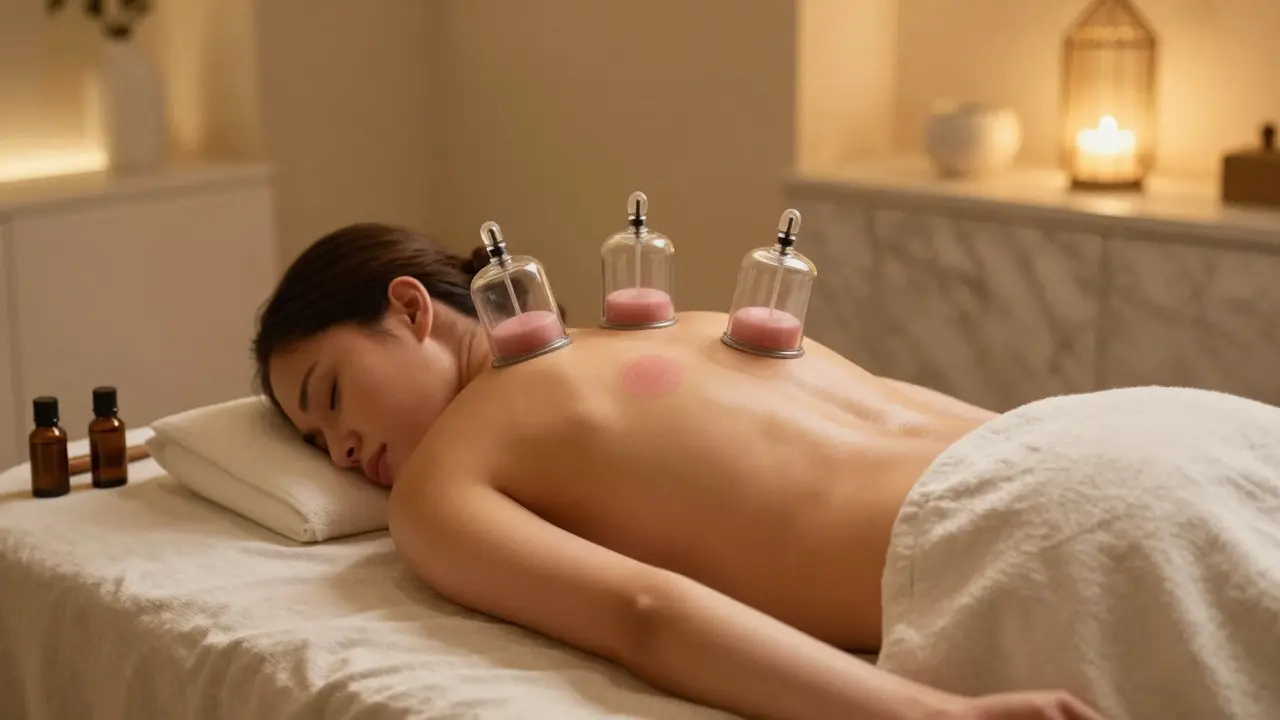
Cupping therapy can ease muscle pain and stress, but it's not safe for everyone. Learn who should avoid cupping-including those on blood thinners, pregnant women, and people with certain health conditions-to stay safe and get the most from this ancient practice.