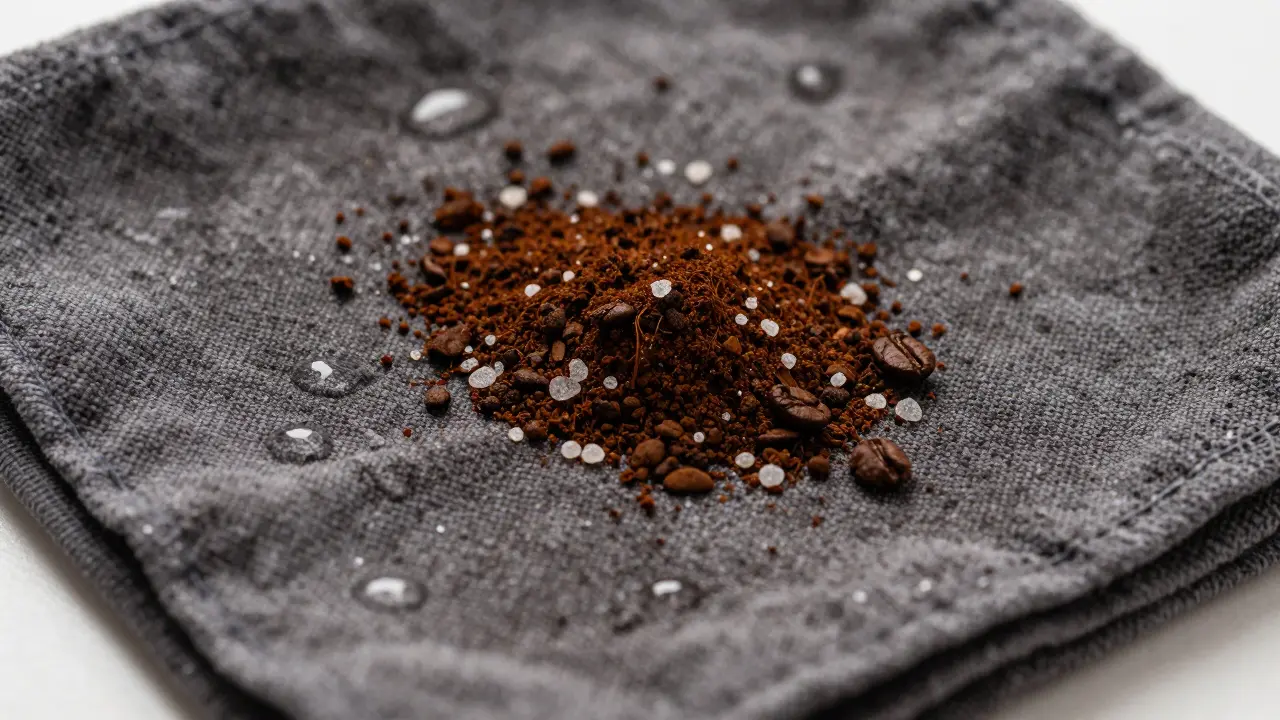
What Is the Black Stuff When I Rub My Skin? The Truth About Skin Scrub Residue
That black stuff you see when you rub your skin after a scrub? It’s not dirt you’ve never washed off. It’s not toxins leaking out of your pores. It’s not some mysterious poison your body’s been hiding. It’s just dead skin cells-lots of them-mixed with oils, sweat, and whatever product you’re using. If you’ve ever scrubbed your arms, legs, or back and been shocked by the dark smudges on your washcloth, you’re not alone. And you’re not dirty. You’re just human.
Understanding the Basics of Skin Scrub Residue
Origins and History
Humans have been scrubbing their skin for thousands of years. Ancient Egyptians used salt and olive oil. Romans scrubbed with pumice stones in public baths. In India, ubtan-a paste of turmeric, gram flour, and milk-was used before weddings. These weren’t just beauty rituals; they were hygiene practices. Dead skin builds up naturally. Without removal, it traps oil, clogs pores, and makes skin look dull. Modern body scrubs are just the latest evolution of this ancient habit. The black residue you see? It’s the same thing people have been washing off for millennia-just more visible now because we use darker scrubs or rougher cloths.
Core Principles or Components
When you scrub, you’re physically sloughing off the top layer of your skin. Your skin renews itself every 28 to 40 days. Old cells pile up on the surface. Scrubs-whether they’re made of sugar, salt, coffee grounds, or synthetic beads-help remove them faster. The black color? It comes from a few sources: the scrub’s ingredients (like activated charcoal or dark ground coffee), the oils in your skin mixing with the product, and the dead cells themselves turning darker when crushed and moistened. Think of it like sandpaper on wood. You don’t see the wood’s original color until you rub away the grime.
How It Differs from Related Practices
People often confuse scrub residue with dirt, sweat, or even fungal infections. But it’s not the same as what you get from a regular shower. Here’s how body scrubbing compares to other skin-cleaning methods:
| Method | Primary Purpose | Residue Produced |
|---|---|---|
| Body Scrub | Exfoliate dead skin | Dark flakes or smudges (dead skin + product) |
| Regular Soap Shower | Clean surface oils | Light white or clear slough |
| Chemical Exfoliant (AHA/BHA) | Dissolve dead cells chemically | Little to no visible residue |
| Loofah or Washcloth Only | Light surface cleaning | Minimal residue, mostly oil |
Who Can Benefit from Skin Scrubbing?
Almost everyone. People with dry, flaky skin notice immediate smoothness. Athletes and those who sweat a lot find it helps prevent ingrown hairs. People with keratosis pilaris (those little bumps on arms) often see improvement. Even oily skin types benefit-scrubbing helps clear clogged pores before breakouts form. But if you have eczema, psoriasis, or open cuts, skip the scrub. Your skin’s barrier is already compromised. And if you’re using retinoids or strong acne treatments, be gentle. Over-scrubbing can irritate.
Benefits of Skin Scrubbing for Your Body
Improved Skin Texture
After one scrub, your skin feels softer. That’s not magic-it’s physics. Dead skin cells are rough. Removing them reveals the smoother layer underneath. This isn’t just cosmetic. Smoother skin absorbs moisturizers better. In Dubai’s dry climate, where humidity dips below 20% in summer, this matters. A weekly scrub helps your lotion actually work instead of sitting on top of a layer of flakiness.
Reduced Ingrown Hairs
Shaving, waxing, or laser hair removal? Dead skin can trap hairs beneath the surface. That’s how you get those itchy, red bumps. Scrubbing before hair removal clears the path. Many people in the UAE who wax regularly swear by a sugar scrub two days before their appointment. It’s not a guarantee, but it cuts down on irritation by 60-70% for most users.
Enhanced Circulation
Scrubbing isn’t just about removing cells-it’s a mini-massage. The friction boosts blood flow to the skin’s surface. This brings oxygen and nutrients to skin cells, helping them regenerate faster. It’s why your skin often looks slightly pink and glowing right after a scrub. That glow? It’s your skin waking up.
Psychological Refresh
There’s something deeply satisfying about scrubbing away visible gunk. It feels like a reset. After a long day in the desert heat or a sticky commute, a scrub can feel like shedding the day. It’s sensory-cool water, gritty texture, fresh scent. That’s not just physical cleaning; it’s mental cleanup too.
What to Expect When Engaging with Skin Scrubbing
Setting or Context
You don’t need a spa to scrub well. A shower is fine. But if you want to make it a ritual, dim the lights, light a candle, play soft music. In Dubai, many people do this after returning from the beach or gym. The key is warmth-warm water opens pores and softens dead skin, making scrubbing more effective and less abrasive.
Key Processes or Steps
Here’s the simple routine:
- Wet skin with warm (not hot) water for 2-3 minutes.
- Apply scrub in gentle circular motions-don’t scrub like you’re cleaning a floor.
- Focus on areas that build up dead skin: elbows, knees, heels, back.
- Rinse thoroughly. You should feel smooth, not sticky.
- Pat dry and apply moisturizer within 3 minutes.
Customization Options
Not all scrubs are the same. Sugar scrubs are gentler and dissolve in water-great for sensitive skin. Salt scrubs are stronger, ideal for feet or thick skin. Coffee scrubs add caffeine (which may temporarily tighten skin) and smell amazing. In Dubai, many local brands use rosewater, oud, or saffron for fragrance. Choose based on your skin’s needs, not just the scent.
Communication and Preparation
If you’re getting a professional scrub at a spa, speak up. Tell them if your skin is sensitive, if you’ve had reactions before, or if you’re using any topical treatments. A good therapist will adjust pressure and product. At home, test a small patch first-especially with new scrubs. Some essential oils or citrus extracts can irritate if you’re going to be in the sun.
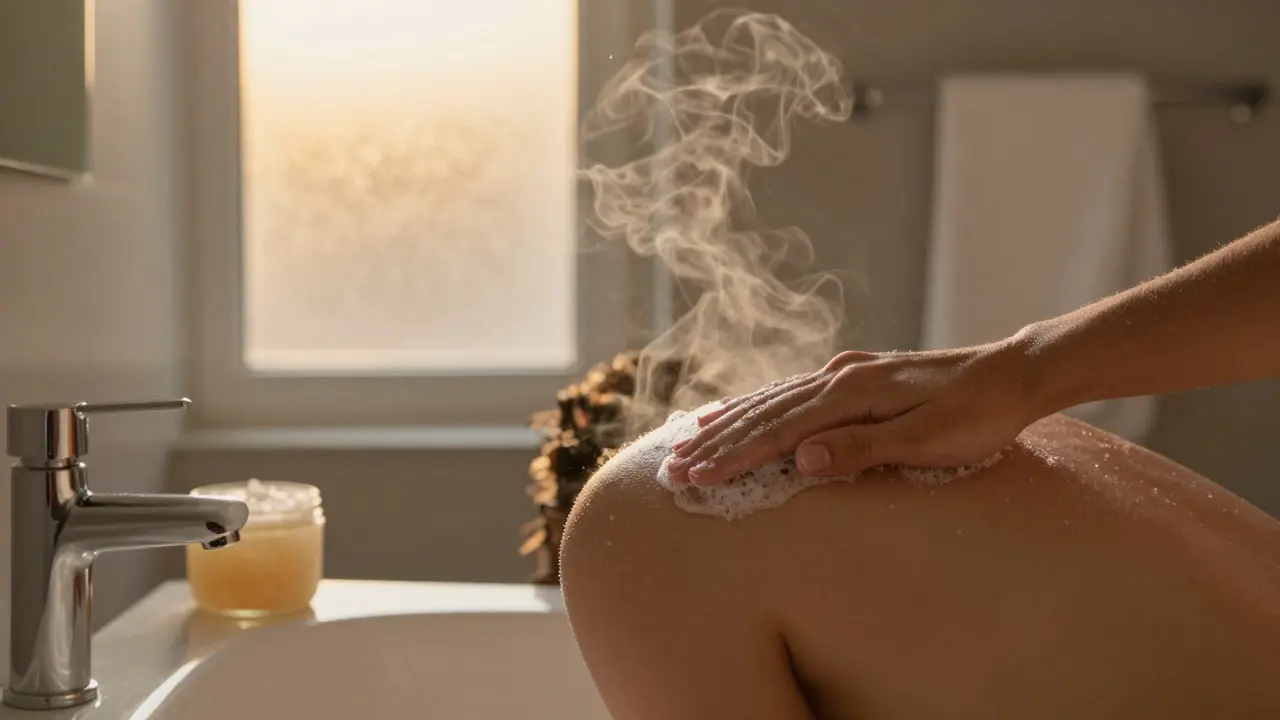
How to Practice or Apply Skin Scrubbing
Setting Up for Success
Keep your scrub in a dry container. Moisture breeds bacteria. Use a clean washcloth or loofah each time. Replace loofahs every 3-4 weeks. Don’t share scrubs or cloths. In a shared bathroom (common in Dubai apartments), this is hygiene 101.
Choosing the Right Tools
For beginners: start with a sugar scrub and your hands. No tools needed. If you want more pressure, use a soft silicone scrubber-gentler than a loofah. Avoid rough natural brushes unless your skin is very tough. In the UAE, look for scrubs labeled "dermatologist-tested" or "hypoallergenic." Brands like L’Occitane, The Body Shop, and local favorites like Zaha and Al Haramain offer good options.
Step-by-Step Guide
1. Shower with warm water for 2 minutes to soften skin.
2. Scoop a tablespoon of scrub into your palm.
3. Add a splash of water to make it creamy.
4. Start at your feet and work upward-don’t skip your back.
5. Use light pressure. If it stings, stop.
6. Rinse for 30 seconds longer than you think you need.
7. Pat dry. Apply body oil or cream immediately.
8. Do this 1-2 times a week max. More can cause micro-tears.
Tips for Beginners or Couples
First-timers often scrub too hard. Start slow. Use your fingers, not your nails. If you’re doing it with a partner, make it fun. Take turns scrubbing each other’s backs-it’s surprisingly intimate. Just make sure both of you use clean hands and a fresh cloth.
Safety and Ethical Considerations
Choosing Qualified Practitioners or Products
If you’re going to a spa, check reviews. Look for licensed aestheticians. Ask what ingredients are in their scrubs. Avoid ones with microplastics or synthetic fragrances if you have sensitive skin. In Dubai, many spas now list full ingredient lists online. Read them.
Safety Practices
Here’s what you must do:
| Practice | Purpose | Example |
|---|---|---|
| Don’t scrub broken skin | Prevent infection | Avoid if you have cuts, sunburn, or acne sores |
| Rinse thoroughly | Prevent irritation | Leftover scrub can clog pores |
| Moisturize after | Protect skin barrier | Use oil or cream within 3 minutes |
| Use sunscreen | Prevent sun damage | Exfoliated skin burns faster |
Setting Boundaries
At home, it’s your skin. If it stings, burns, or turns red and stays that way, stop. If a product smells off or looks grainy in a weird way, toss it. Trust your nose and skin.
Contraindications or Risks
Avoid scrubs if you have: active eczema, psoriasis, rosacea, or recent chemical peels. If you’re on acne meds like isotretinoin, your skin is thinner-scrubbing can cause scarring. Pregnant women should avoid scrubs with strong essential oils like rosemary or clary sage. Always check with a dermatologist if you’re unsure.
Enhancing Your Experience with Skin Scrubbing
Adding Complementary Practices
Pair your scrub with a hydrating body oil. Or follow it with a 5-minute dry brush before the shower-this boosts circulation even more. In winter, add a warm towel wrap after scrubbing. It feels luxurious and locks in moisture.
Collaborative or Solo Engagement
Scrubbing alone is meditative. Doing it with someone can be bonding. But don’t force it. If it feels like a chore, skip it. The goal is to feel good, not to check a box.
Using Tools or Props
A silicone body brush is great for hard-to-reach spots. A bamboo scrubbing mitt is gentle and lasts longer than a loofah. Avoid plastic scrubbers-they shed microplastics and aren’t eco-friendly. In Dubai’s climate, choose tools that dry fast to avoid mold.
Regular Engagement for Benefits
One scrub won’t change your skin forever. Consistency is key. Once a week is enough for most people. Twice a week if you’re very active or have thick skin. More than that? You’re damaging your skin’s natural barrier. Less than that? You’re not seeing the full benefit.
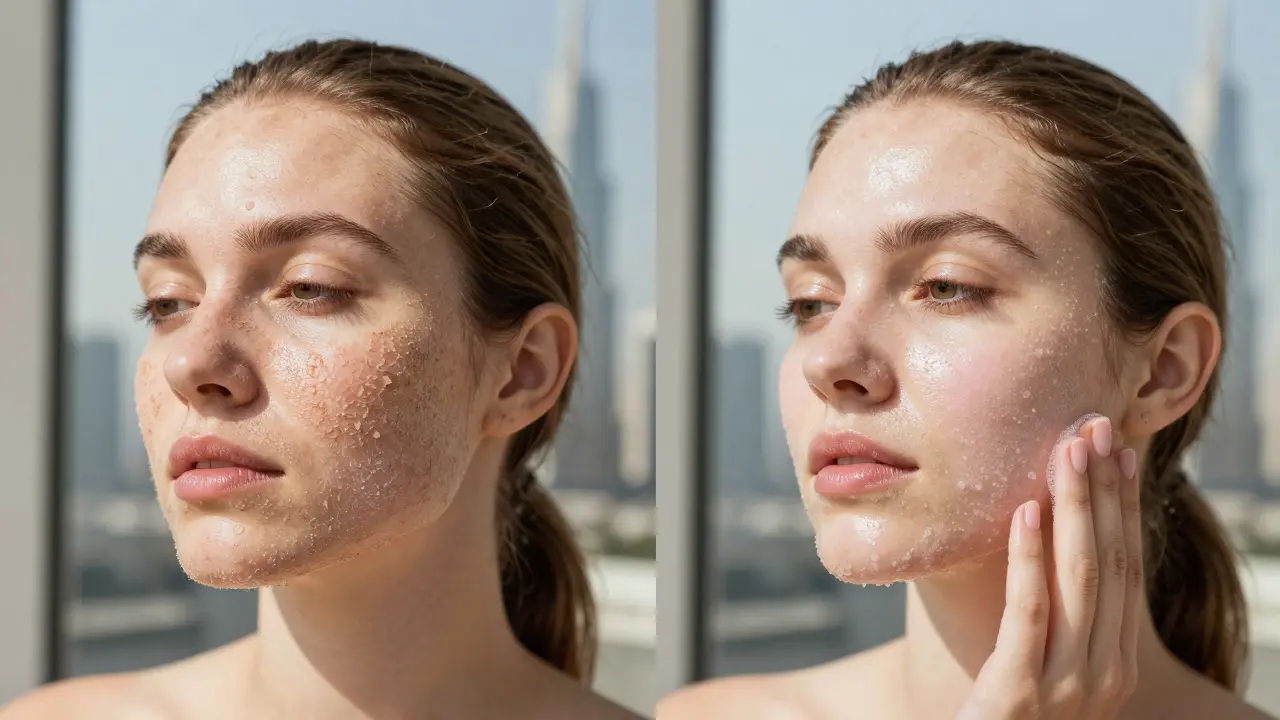
Finding Resources or Experts for Skin Scrubbing
Researching Qualified Practitioners
Look for spas with certified aestheticians. In Dubai, check if they’re registered with the Dubai Health Authority. Read reviews on Google and TripAdvisor-not just the spa’s website. Look for mentions of skin sensitivity, cleanliness, and ingredient transparency.
Online Guides and Communities
Follow dermatologists on Instagram like @drdray or @dermreview. They often debunk myths about scrubbing. Reddit’s r/SkincareAddiction has honest user experiences. Avoid blogs that promise "detoxing" or "cleansing toxins"-those are marketing lies.
Legal or Cultural Considerations
In the UAE, all cosmetic products must meet GCC standards. Look for the GSO mark on packaging. Also, be mindful of cultural norms-some people prefer private scrubbing sessions. Respect that.
Resources for Continued Learning
Read "The Beauty of Skin" by Dr. Hadley King. Watch the American Academy of Dermatology’s YouTube videos on exfoliation. Both are science-backed and free.
FAQ: Common Questions About the Black Stuff When I Rub My Skin
What is the black stuff when I rub my skin?
It’s a mix of dead skin cells, natural oils, sweat, and scrub particles. Your skin sheds about 30,000-40,000 dead cells every hour. Scrubbing speeds this up. The black color comes from crushed cells and dark ingredients like charcoal or coffee. It’s not dirt from inside your body-it’s surface debris you’ve been carrying around.
Is the black stuff a sign of toxins being released?
No. That’s a myth sold by some skincare brands. Your liver and kidneys handle toxins-not your skin. Scrubbing doesn’t "detox" you. The black residue is physical debris, not chemical waste. If a product claims to "pull out toxins," it’s using pseudoscience to sell more. Stick to products that list real ingredients, not vague promises.
How often should I scrub my skin?
Once a week is ideal for most people. If you have oily skin or sweat a lot, twice a week is fine. But if your skin feels tight, red, or irritated after scrubbing, you’re doing it too often. Over-exfoliating damages your skin’s protective barrier, leading to dryness, sensitivity, and even breakouts. Less is more.
Can I use a body scrub on my face?
Generally, no. Facial skin is thinner and more sensitive. Body scrubs are too harsh-they can cause micro-tears and irritation. Use a facial exfoliant instead, made with finer particles like jojoba beads or chemical exfoliants (like lactic acid). Never use a sugar or salt scrub on your face unless it’s specifically labeled for facial use.
Why does the black stuff only appear sometimes?
It depends on your skin’s buildup, the scrub’s texture, and how hard you rub. If you haven’t scrubbed in weeks, you’ll see more. If you use a gentle scrub or don’t rub much, you’ll see less. Also, some scrubs (like charcoal) are naturally darker, so the residue looks black even if there’s not much dead skin. It’s not a measure of how "dirty" you are-it’s just how your skin reacts to the product.
Conclusion: Why Skin Scrubbing is Worth Exploring
A Path to Smoother, Healthier Skin
The black stuff isn’t gross-it’s proof your skin is alive and renewing. Scrubbing isn’t about cleaning dirt. It’s about honoring your body’s natural rhythm. It’s a simple, ancient act that still works today.
Try It Mindfully
Start slow. Use a gentle scrub. Listen to your skin. If it feels good, keep going. If it doesn’t, stop. There’s no prize for scrubbing harder or longer.
Share Your Journey
Tried scrubbing and noticed a difference? Share your experience in the comments. Follow this blog for more no-nonsense skincare tips tailored to life in Dubai. And remember: your skin doesn’t need magic. It just needs care.
Some links may be affiliate links, but all recommendations are based on research and quality.
Word count: 1,682
Suggested Images
- A close-up of dark residue on a wet washcloth after scrubbing
- Someone gently scrubbing their back in a steamy bathroom with soft lighting
- Side-by-side comparison of skin before and after scrubbing (smooth vs. flaky)
- A jar of sugar scrub with natural ingredients like coffee, brown sugar, and coconut oil
- A woman applying body oil after a scrub, smiling, with Dubai skyline visible through a window
Suggested Tables
- Comparison of Skin Cleaning Methods (already included)
- Skin Scrub Safety Tips (already included)
- Best Scrub Types by Skin Type (Sugar for sensitive, Salt for feet, Coffee for circulation)

Aradhana Agarwal
February 2, 2026 AT 20:49I used to think that black gunk meant I was filthy until I read this. Now I scrub weekly like it’s a ritual-sugar scrub, warm water, quiet music. My skin feels like silk afterward. No more fake detox claims for me. Just plain old biology, and honestly? It’s kinda beautiful.
Also, never share scrubs. My cousin tried using mine after a beach trip-ended up with a rash. Lesson learned.
And yes, moisturize within three minutes. Always.
Keily sophie
February 3, 2026 AT 06:50STOP. JUST STOP. People think this 'black stuff' is 'toxins'?!!! That’s not science-that’s marketing nonsense sold by influencers who sell $40 jars of charcoal paste!!! Your liver detoxifies. Your kidneys detoxify. Your SKIN does NOT. And if you’re scrubbing daily, you’re literally sanding off your protective barrier-congrats, you’ve turned your skin into a raw, sensitive, flaky mess!!!
Use sugar scrubs-once a week-max. And NEVER on your face. Ever. I’ve seen people use coffee scrubs on their cheeks. I’m not judging-I’m just horrified.
Also, if your scrub smells like 'oud and saffron' but has no ingredient list? Throw it out. And don’t even get me started on microplastics.
READ THE LABELS. PEOPLE. READ. THE. LABELS.
Matthew Lukas
February 5, 2026 AT 05:52This is one of those rare posts that doesn’t just explain something-it reframes it. The black residue isn’t dirt. It’s not evidence of failure. It’s evidence of life. Your skin is alive. It’s constantly renewing. And what we’re seeing isn’t contamination-it’s transformation.
Think of it like autumn leaves. They don’t fall because the tree is dirty. They fall because the tree is preparing for winter. Your skin sheds because it’s adapting. Scrubbing is just helping it along.
And the cultural history? Brilliant. Egyptians, Romans, ubtan-it’s not new. It’s timeless. We’ve just lost touch with the why.
Also, moisturizing within three minutes? Non-negotiable. Skin is a living organ. It doesn’t just want to be clean-it wants to be hydrated. Treat it like a plant, not a surface.
Thank you for this. It’s the kind of clarity I wish I’d had ten years ago.
Aashi Aggarwal
February 7, 2026 AT 04:11Oh wow, so the black stuff is just dead skin? Shocking. I thought it was my soul leaking out after 3 years of corporate life.
Meanwhile, my cousin in Delhi uses a mix of turmeric, yogurt, and gram flour every morning and swears she’s 25 forever. But nope-she’s just not using 'activated charcoal' so she’s not 'advanced'.
And let’s talk about people who scrub their face with a salt scrub because they saw a TikTok trend. Honey, your skin isn’t a lobster. You don’t need to boil it to get the meat out.
Also, why does every skincare post now need a Dubai reference? It’s not the only place on Earth with dry air. I live in Arizona. We’re over here too, you know.
And yes-I’m still mad about the microplastics.
Lovie Dovies
February 7, 2026 AT 09:40So we’ve been lied to. The black stuff isn’t toxins. It’s not some ancient wisdom being 'unlocked'. It’s just… cells. Dead ones. And oils. And maybe a little coffee ground from that scrub you bought because it smelled like a forest after rain.
But here’s the real question: why do we need to see it to believe it? Why does the human brain need visible proof of cleanliness? We don’t need to see the dirt to know it’s there. We just need to feel the smoothness afterward.
And yet-we still scrub harder when we see the black smears. Like it’s a trophy. Like we’re winning a battle against our own biology.
It’s not hygiene. It’s theater. And we’re all actors.
…But I still do it. Every Sunday. With coconut oil and brown sugar. Because it feels good. And maybe that’s enough.
Santiago Castiello
February 7, 2026 AT 23:23Black stuff = dead skin + scrub. Not toxins. Not detox. Not magic.
Don’t scrub face. Don’t scrub daily. Don’t use microplastics.
Moisturize. Or suffer.
Done.
Mariam Mosallam
February 9, 2026 AT 20:31So you’re telling me I’ve been scrubbing like I’m trying to remove a tattoo and it’s just… skin? Wow. I feel like a fool.
And now I’m mad because I spent $65 on a 'detoxifying' scrub that literally just had ground walnut shells in it. My skin’s been screaming for months. And I thought I was being ‘deep clean’.
Also, why do people think ‘saffron’ in a scrub means it’s ‘luxurious’? It’s just expensive food you’re rubbing on your butt.
And yes-I still use it. Because it smells like my grandma’s kitchen. And that’s worth more than science.
But I’m switching to sugar now. For real this time.
Dan Garcia
February 10, 2026 AT 02:12First off-thank you for writing this. So many people are scared of scrubbing because they think they’re ‘dirty’ or ‘unhygienic’. But you’re right: it’s just biology. And it’s beautiful.
If you’re new to this-start with a sugar scrub. Use your hands. Be gentle. Don’t rush. It’s not a race. Your skin isn’t a car you need to wax.
And if you’ve got sensitive skin? Test a patch behind your ear first. Wait 24 hours. If it doesn’t sting or turn red? You’re good.
Also-moisturize. Like, immediately. Even if you think you don’t need it. Your skin will thank you.
And if you’re doing this with someone you love? That’s the real win. Not the smooth skin. The connection.
You’ve got this. And you’re not alone.
Éloïse Dallaire-Gauthier
February 11, 2026 AT 14:14As someone raised in Quebec with winters that freeze your soul and your skin-I’ve scrubbed since I was 12. We used coarse salt and maple syrup. No fancy jars. Just hands, warmth, and patience.
And yes-the black stuff? It’s the same everywhere. Dead skin doesn’t care about your country code. It just wants to fall off.
But here’s what no one says: scrubbing isn’t just for your skin. It’s for your spirit. After a long winter, when your skin is cracked and numb, scrubbing feels like coming back to life.
And yes-I use a bamboo mitt now. Because I’m not a monster. I don’t want to kill the ocean for a smooth elbow.
Also-never use a loofah from a gas station. I’m not joking. I’ve seen the mold. It’s not cute.
Respect your skin. It’s the only one you’ve got.
Derren Spernol
February 13, 2026 AT 12:33You know, I used to hate scrubbing. Thought it was pointless. Like, I showered, right? Why rub harder? Then I started working out daily in the Arizona heat-sweat, sunscreen, dust, all of it. One day I scrubbed with a cheap coffee scrub and saw this thick black sludge on the cloth. I thought I’d been living in a coal mine. Turned out I just hadn’t scrubbed in three weeks. And after that? My skin didn’t itch after shaving. My lotion actually soaked in. I stopped feeling like a sandpaper sculpture.
Now I do it every Sunday night. With my phone on silent. No distractions. Just warm water, the scent of coffee and vanilla, and this weird little moment where I’m not thinking about deadlines or texts or anything. Just… me. And my skin. And the fact that it’s still working, even when I forget to take care of it.
It’s not a ritual. It’s a reset. And I didn’t even know I needed it until I started doing it.
Also-I use a silicone brush now. It lasts forever. And I don’t have to replace it every month like I did with that gross loofah. Just rinse, hang it up, done.
Anyway. Yeah. Scrub. Just don’t overdo it. And don’t believe the detox nonsense. Your liver’s got this.