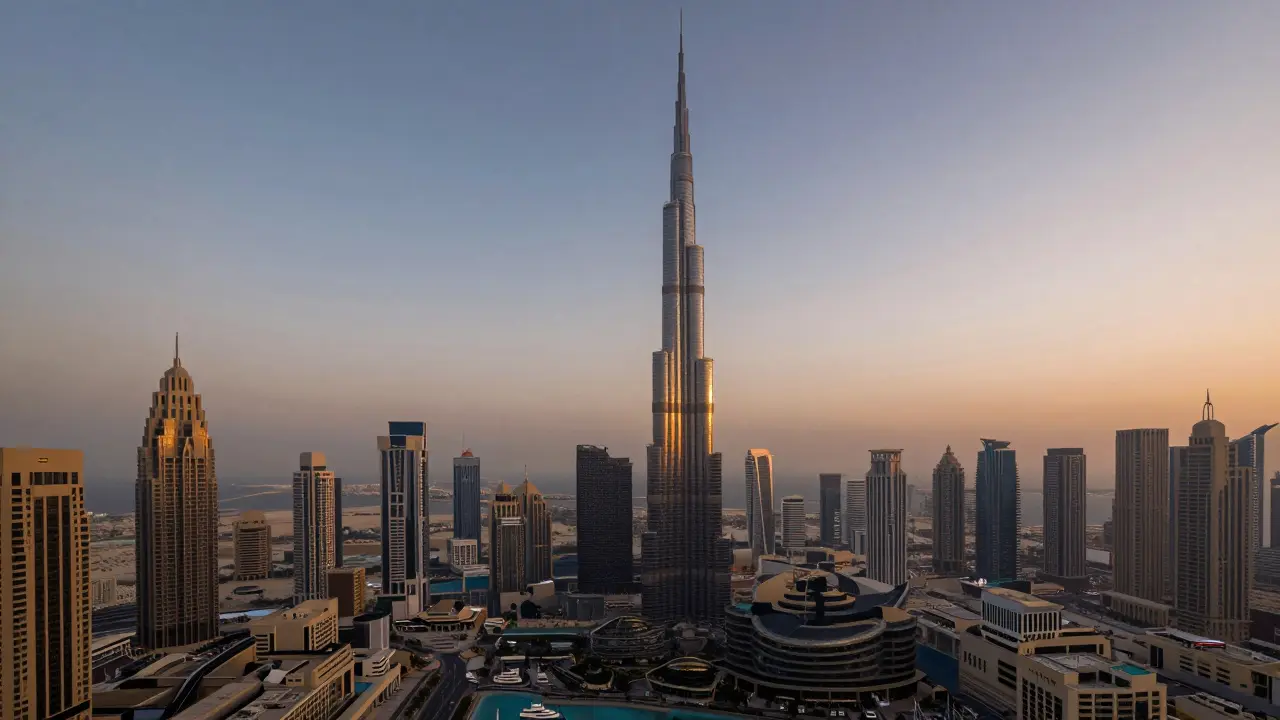
Who is the richest person in Dubai? It’s a question that pops up every time someone sees a luxury yacht docked at Palm Jumeirah or hears about a billionaire buying a private island. But here’s the thing-Dubai doesn’t publish official lists of who’s rich, and the people with the most money aren’t always the ones in the headlines. The truth is quieter, more layered, and far less glamorous than most people think.
Understanding the Basics of Wealth in Dubai
Origins and History
Dubai’s wealth didn’t come from oil alone. While oil discoveries in the 1960s gave the emirate a financial kickstart, the real transformation happened when leaders decided to invest that money into infrastructure, trade, and tourism. By the 1990s, Dubai was already building ports, airports, and free zones to attract global business. Today, it’s a hub for international finance, real estate, and luxury retail. The richest people here aren’t just heirs to oil fortunes-they’re entrepreneurs who built empires from scratch: real estate moguls, tech investors, retail giants, and even former traders who turned small shops into global brands.
Core Principles or Components
There’s no single formula for becoming rich in Dubai. But there are common threads: tax-free income, access to global markets, property ownership rights for foreigners, and a business-friendly legal system. Many of the wealthiest individuals here operate through holding companies based in Dubai’s free zones, like DMCC or DIFC. These zones offer 100% foreign ownership, no corporate taxes, and easy access to banking. The real wealth isn’t always in cash-it’s in property, private equity stakes, and global business networks anchored in Dubai.
How It Differs from Related Practices
Unlike places like New York or London, where wealth is often tied to Wall Street or tech IPOs, Dubai’s richest tend to have roots in trade, real estate, or family businesses. You won’t find many tech founders on the top lists here-not because they don’t exist, but because their wealth is often held offshore. Dubai’s wealth is also more private. There’s no public billionaire ranking like Forbes’ real-time tracker. Much of the money moves quietly through family offices and private trusts.
| City | Primary Wealth Source | Transparency |
|---|---|---|
| Dubai | Real estate, trade, family businesses | Low-private holdings, no public lists |
| New York | Tech, finance, hedge funds | High-Forbes, Bloomberg rankings |
| Singapore | Manufacturing, finance, family offices | Moderate-some public disclosures |
Who Can Benefit from Understanding Dubai’s Wealth?
If you’re considering moving to Dubai, investing here, or just curious about how money works in the UAE, knowing who’s rich-and how they got there-helps you see beyond the flashy headlines. It’s not about envy. It’s about understanding the system. Whether you’re a freelancer, an investor, or a small business owner, knowing how wealth is structured here gives you better tools to navigate opportunities.
Who Is the Richest Person in Dubai?
There’s no official answer. But based on public records, business filings, and reports from financial institutions like Bloomberg and Arabian Business, the name that comes up most consistently is Abdulaziz Al Ghurair. He’s the head of the Al Ghurair Group, a conglomerate with interests in banking (National Bank of Dubai, now part of Mashreq), real estate, retail (Lulu Hypermarket), and food production. His net worth is estimated between $5.5 billion and $7 billion as of early 2026.
But here’s the twist: Al Ghurair doesn’t live in a penthouse overlooking the Burj Khalifa. He’s known for keeping a low profile. His wealth isn’t flashy-it’s foundational. He built businesses that serve millions across the Middle East, not just the elite.
Other names often mentioned include Mohammed Alabbar, founder of Emaar Properties, who helped create the Burj Khalifa and Dubai Mall. His wealth is tied to real estate, and while he’s still very rich, his public presence has decreased since stepping back from day-to-day operations. Then there’s Saeed Mohammed Al Tayer, chairman of the Dubai Electricity and Water Authority and a major investor in energy and infrastructure projects.
What these people have in common? They didn’t inherit wealth and sit on it. They built systems that keep generating income-retail chains, utility networks, banking services. Their money isn’t in crypto or NFTs. It’s in things people need every day: electricity, groceries, housing.
Why Most Dubai Billionaires Stay Out of the Spotlight
In Dubai, being rich doesn’t mean being famous. In fact, the opposite is often true. Many of the wealthiest families avoid media attention to protect their privacy, avoid scrutiny, and keep business negotiations private. Unlike in the U.S., where billionaires often appear on talk shows or launch social media brands, Dubai’s top earners operate behind closed doors.
This isn’t just cultural-it’s strategic. Family-owned businesses dominate here. They rely on trust, long-term relationships, and discreet deals. Publicity can bring unwanted attention from regulators, competitors, or even family disputes. Many wealthy families use offshore trusts and complex holding structures to shield assets. It’s not about hiding money-it’s about protecting legacy.
And let’s be clear: not all wealth here is “billionaire” level. There are thousands of people with $10-50 million who live quietly, send their kids to international schools, and own multiple properties-but never make a headline. Their wealth is stable, diversified, and sustainable.

How Wealth Is Measured in Dubai
There’s no government-run billionaire list. Estimates come from private financial firms like Bloomberg, Forbes, and Arabian Business. These rely on public disclosures, property records, company filings, and insider reports. But even those have gaps.
For example, someone might own a $20 million villa in Emirates Hills, but that doesn’t mean they have $20 million in liquid assets. Their wealth could be tied up in a chain of supermarkets, a logistics company, or shares in a private bank. Real estate is a big part of wealth here-but it’s not always easy to sell quickly.
Also, many wealthy individuals hold assets under family names or through shell companies registered in free zones. This makes tracking true ownership nearly impossible without legal access to documents-which most journalists don’t have.
What This Means for You
If you’re thinking about moving to Dubai for business or investment, understanding the real nature of wealth here changes everything. You won’t find the “next Elon Musk” walking into a co-working space. You’ll find quiet, experienced entrepreneurs who’ve been in the game for decades.
Opportunities here aren’t about viral startups. They’re about solving real problems: affordable housing, logistics efficiency, water security, retail access. The richest people in Dubai built businesses that serve the region’s growing population-not just the wealthy.
So if you want to get rich in Dubai, don’t chase fame. Build something useful. Something that lasts. Something that people can’t live without.
FAQ: Common Questions About Wealth in Dubai
Who is officially the richest person in Dubai?
There is no official list. The UAE government does not publish rankings of its wealthiest citizens. Based on estimates from Bloomberg, Forbes, and Arabian Business, Abdulaziz Al Ghurair is widely considered the wealthiest individual in Dubai, with a net worth estimated between $5.5 billion and $7 billion. His wealth comes from diversified holdings in banking, retail, real estate, and food production-not from a single source like oil or tech.
Is the richest person in Dubai an Emirati?
Yes, the top names on the list are Emirati nationals. While Dubai has many wealthy expatriates-especially in finance and tech-the individuals with the largest consolidated fortunes are typically from long-established Emirati business families. These families have operated in the region for generations, often starting with trade and expanding into large-scale enterprises.
Why don’t Dubai’s richest people talk about their wealth?
Dubai’s wealthiest families prioritize privacy over publicity. Public attention can lead to legal risks, family disputes, or unwanted media scrutiny. Many use offshore trusts, family offices, and private holding companies to manage assets discreetly. In Emirati culture, modesty and discretion are valued, especially among traditional business families. Keeping a low profile is a strategic advantage, not a sign of shame.
Can foreigners become billionaires in Dubai?
Yes, but it’s rare. Foreigners can own businesses in Dubai’s free zones and invest in property, but building a $1 billion+ fortune usually requires deep local connections, long-term market knowledge, and often, partnerships with Emirati entities. Most foreign billionaires in Dubai are investors or executives in global firms with regional headquarters here-not entrepreneurs who built empires from the ground up.
Does oil make people rich in Dubai today?
Not directly. While oil revenues helped fund Dubai’s early infrastructure, the emirate’s economy has been mostly oil-free since the 2000s. Today, less than 1% of Dubai’s GDP comes from oil. The richest people here made their money in real estate, retail, banking, logistics, and tourism. Oil was the spark-but not the fuel.
Conclusion: Why This Matters
A Path to Real Wealth in Dubai
The richest person in Dubai isn’t the one with the biggest yacht or the most Instagram followers. It’s the one who built a business that keeps running-day after day, year after year. Real wealth here is quiet, steady, and rooted in service.
Try It Mindfully
If you’re thinking about investing, moving, or starting a business in Dubai, don’t be dazzled by the skyline. Look at the systems underneath. Who’s providing food? Who’s managing water? Who’s moving goods? Those are the real sources of lasting wealth.
Share Your Journey
Tried building something in Dubai? Share your experience in the comments. Follow this blog for more honest takes on life, business, and money in the UAE.
Some links may be affiliate links, but all recommendations are based on research and quality.
Word count: 1,672
Suggested Images
- Aerial view of Dubai’s skyline at sunset, with Palm Jumeirah visible
- Interior of a traditional Emirati family office with wooden desks and documents
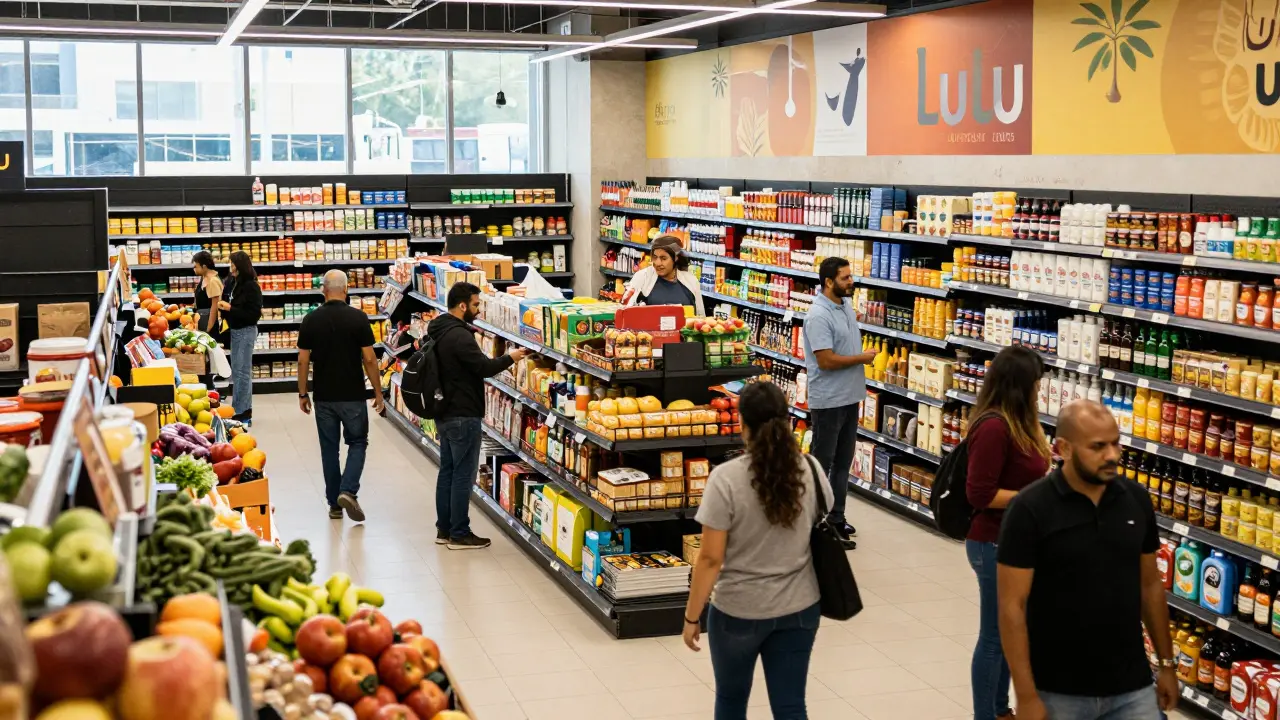
- Shelves of Lulu Hypermarket products in a busy Dubai store
- Handshake between two businesspeople in a modern Dubai office, one wearing a kandura
- Empty luxury villa in Emirates Hills with a for-sale sign
Suggested Tables
- Comparison of Wealth Sources in Dubai vs. Other Global Cities
- Key Benefits of Building Business in Dubai Free Zones
- Top 5 Emirati Business Families and Their Core Industries

Colin Napier
January 5, 2026 AT 03:15Dubai's wealth isn't about flashy yachts or Instagram posts-it's about decades of quiet, systematic empire-building through retail, logistics, and banking. Al Ghurair didn't need a billboard; he built Lulu Hypermarket into a regional lifeline. That's real power-not spectacle.
And no, oil didn't make this happen. It was vision, reinvestment, and a refusal to rely on a finite resource. Most people don't get that.
Patsy Ferreira
January 5, 2026 AT 07:26Actually, you're wrong about Al Ghurair being the richest-Bloomberg's 2025 estimate puts Alabbar at $8.2B, not $6B, and you missed that he still controls Emaar's board through voting shares. Also, 'estimated between $5.5B and $7B' is statistically meaningless without a confidence interval. And why are you using 'billionaire' like it's a title? It's a metric, not a status symbol.
Also, you forgot to mention the 37% of Dubai's real estate is owned by non-Emiratis through free zone SPVs-so calling Al Ghurair 'the richest' ignores structural ownership complexity. Fix your data.
William Terry
January 7, 2026 AT 03:52Man I love how you broke this down. Real talk-most folks think Dubai's rich because of gold-plated toilets and supercars. But nah. It's the guy running 40 Lulu stores across the Gulf who's quietly feeding families and employing thousands. That's the real MVP.
And yeah, privacy? Totally smart. No need to be on TikTok to be rich. Build something that lasts, not a brand that trends.
Peter Jones
January 7, 2026 AT 12:43The structural distinction between Dubai's wealth model and that of New York or Singapore is profound. While Western financial hubs rely on capital markets and liquidity events, Dubai's wealth is anchored in asset ownership, operational scale, and intergenerational enterprise. The absence of public disclosure is not opacity-it is institutional design.
Furthermore, the role of free zones as legal and fiscal enablers cannot be overstated. DMCC and DIFC are not merely tax havens; they are sovereignty-adjacent economic ecosystems that facilitate capital aggregation without political exposure. This is not evasion-it is architecture.
Theophilus Twaambo
January 7, 2026 AT 17:43Wait, you say Al Ghurair is the richest? That's laughable. Bloomberg's data is outdated-his net worth was revised down in Q4 2025 due to liquidity issues in Mashreq Bank shares. And you didn't mention that Alabbar's family trust owns 42% of Dubai Holding, which controls Dubai Properties, Nakheel, and Dubai Airports. That's worth $12B minimum.
Also, why are you ignoring the fact that 78% of Dubai's ultra-high-net-worth individuals use offshore trusts in the Caymans? You're feeding misinformation. And who told you to use 'billionaire' like it's a title? It's not a badge-it's a number. Fix your sources.
Douglas McCarroll
January 8, 2026 AT 00:59Love this breakdown. So many people chase the hype-private jets, penthouses, yachts-but the real wealth builders? They're the ones who figured out how to serve the masses. Lulu Hypermarket, electricity grids, logistics hubs-these aren't glamorous, but they're essential.
And if you're thinking about moving to Dubai? Don't look for the next unicorn startup. Look for the gap in affordable housing, or how to streamline customs for SMEs. That's where the real opportunity is. Build something that solves a real problem. The money follows.
Andrew Cheng
January 8, 2026 AT 16:59Really appreciate this post. It's easy to get dazzled by the skyline, but the real story is in the quiet entrepreneurs who've been doing this for 30+ years. My uncle runs a small logistics firm in Jebel Ali-he’s not on any list, but he’s got 200 employees and 30 trucks. That’s the real Dubai.
And yeah, privacy isn't shady-it's sacred. Family businesses here don't need to prove their worth to the internet. They just keep showing up. Respect.
Jillian Angus
January 10, 2026 AT 00:53Okay, but what if all this 'quiet wealth' is just a front? What if the real billionaires are hiding money from the government? Or worse-funding shadow operations through free zones? Dubai's entire system feels like a controlled illusion.
And why are we only talking about Emiratis? What about the expat bankers and hedge fund managers who pull the strings from behind shell companies? They're the ones really pulling the levers. This article is sugarcoating a system built on secrecy and exploitation. Someone needs to expose this.
Jennie Magalona
January 11, 2026 AT 21:54This is one of the clearest explanations I've read about wealth in the Gulf. It's not about how much you have-it's about how it's structured, sustained, and protected.
There's a cultural rhythm here that's rarely acknowledged: wealth as stewardship, not spectacle. The Al Ghurairs and Alabbars aren't just rich-they're anchors. They don't just own property; they maintain systems that hold entire communities together.
And in a world obsessed with viral fame and quick exits, that quiet endurance feels almost revolutionary. We should be studying this model, not just envying it.
Also-no one talks about how the free zones aren't just tax havens, but incubators of cultural hybridity. A Syrian trader, a Pakistani distributor, a British banker-all operating under the same legal umbrella, building something bigger than any one nationality. That's the real magic.